Category: personal growth

  • The Happiness Advantage

    Some believe happiness comes from finding themselves in the right places, relationships, job, or income level.  I don’t believe that, and in recent years there is enough evidence from the field of psychology in what I have believed all along: happiness is not a byproduct of success. The opposite is actually true: happy people become successful.

    happiness advantage

    After finishing reading Shawn Achor’s book, “The Happiness Advantage,” I bought a copy for everyone on my team.  Shawn’s work is well researched without being didactic. It offers practical steps even for those who are not naturally prone to be happy.  I highly recommend it.

    One of the points that resonated with me the most came from a 40-year-old study directed by psychologist George Vaillant. He summed up his findings in one word “love—full stop.”  In his words, there are “70 years of evidence that our relationships with other people matter and matter more than anything else in the world.”

    As a Christian I knew that. After all, people matter to God. God’s relationship with us was so important that He sent His son to redeem it. I’ve preached it from the pulpit.

    And yet we, no, I, too often sacrifice long-term relationships because of pettiness and self-righteous indignation. “It’s not my turn to call. If he wants to know how I’m doing, he’ll call.”  I have cut people out of my life because of an insensitive remark I found offensive. Just like that. Sometimes I have moments of lucidity and my inner dialogue kicks in, “are you willing to lose a friend over so little an offense? How stupid are you?” Well, pretty stupid at times.

    I want to live and lead from a place of grace and enjoy life-long relationships that define who I am and the legacy I leave behind. Ultimately my happiness depends on how successful I am at doing that. The competing forces of power, money, and pleasure never deliver on their promises. They never have.

    How’s your social network? How close are you to those around you?

  • 4 Questions to Help You Figure Out Your Next Move

    “I’m not sure what to do next with my life.” It’s a familiar phrase I hear quite often these days. The economic downturn has created uncertainties and opportunities. People have lost jobs. Career paths that seemed promising a few years ago are now no longer viable. Quite often I talk with people whose lives are at a crossroads–sometimes of their choosing, most often not. Recently I heard Phil Cooke speak briefly about four questions we all should ask before deciding what to do next.

    4-questions

    1. What comes easy for you? That’s what you are naturally gifted at doing.

    2.What are you passionate about? What gets your pulse to quicken and your eyes to light up?

    3. What do you hate? Perhaps you should solve that problem.

    4. What do you want to leave behind? That’s your legacy…what you want to be remembered by.

    Even if you are not looking to change careers, it’s interesting to answer these questions. Your answer to them might be a good gauge to how happy you are in your current career path.

    After answering those questions, how do you feel about your job?

  • Why Your Next Diet Will Fail

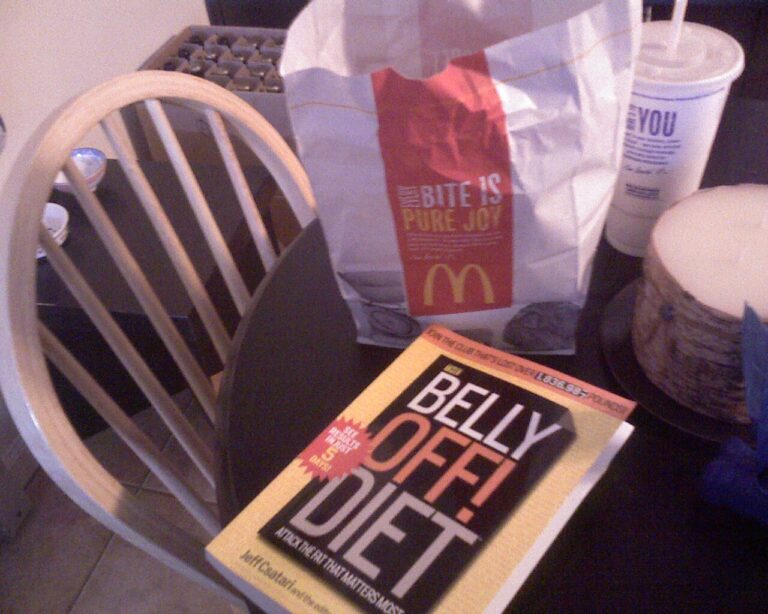
    Chances are you have started a new diet this week. And chances are it will fail.  I recently heard a man describe his failed diet attempt with what he called a “food coach.” His predicament is unfortunately the norm and not the exception.

    diet fail

    After seeing a friend lose close to 40 pounds, this man decided to join the same program and hired his now thinner friend’s nutrition consultant, which he named his food coach. During their first two-hour call he got the marching order on what to do for the first week, including keeping a log of all his caloric intake while using his coach’s advice on what and what not to eat. At the end of week one he had gained 7 lbs.  During the second call, his coached fired him. “Whenever you are ready, you can call me, “ he recounted the conversation to several men as he humorously chronicled his failed attempt at losing weight.

    As I thought about the incident, I know why he couldn’t lose weight. His coach was right, and he was not ready. Unless there’s a motivation tied to a goal, it’s hard for any of us to change a pattern of behavior that has defined us over a period of time.  Why should I say no to warm doughnuts on a Sunday morning? Why should I eat grilled fish when my entire family is eating fettuccine Alfredo with a loaf of bread?

    The answer to those questions will determine your ability to persevere or succumb to the temptation. And the answer might be different to each of one of us. I have some friends who are at risk for heart disease whose answers to these questions have to do more with survival than with vanity. For me, if you ask, my ability to say “no” to a lot of tasty treats has mostly to do with health but a lot of it is pure vanity. Yes, vanity.

    I love the way I feel when I’m not carrying extra weight and I’m able to run faster and get more done during the day, but I also like the way my clothes fit and how I look when I’m at my optimum weight.  I remember looking at a picture of myself 25 pounds heavier and thinking, “that’s it. I’m making a change today.” That was the beginning of a transformation. It happened over a year ago. To date, I’m still on the program.

    Whatever your motivation, you need to see the value in changing your habits and creating an achievable goal or you will, most certainly, not succeed. Hiring a nutritional coach or a personal trainer, and even buying diet pills can only help once you’ve done business with your mind, found your motivation, and set your goal.

    Do you have any health/vanity goals? How are you doing?

  • Choosing Best: When Good Is Not Good Enough

    Sometimes we need to say “no” to a good idea so we can say “yes” to the best idea.  Stephen Covey puts it this way: “It’s easy to say ‘no!’ when there’s a deeper ‘yes!’ burning inside.” While that approach to both business and personal life might make sense, and we see the validity in waiting for the best, that is no easy task for those of us living in our immediate gratification culture. We often sacrifice the best on the crucible of the good. After all, no one was ever penalized for coming up and executing a good idea. But by choosing the good, we forfeit the satisfaction, exhilaration, the mountain-top view of what only the best can provide. So then why do we settle? Here are a few reasons I do it.

    choosing the best

    I don’t know what I want. It’s easy to say yes to a marginally good idea, business, or proposition if I don’t know what I want. If I haven’t thought through an issue or opportunity, then I can go for the good and completely miss the best.

    I’m not willing to pay the price for the best. That’s perhaps the most compelling reason I face when choosing good over best. Whether it’s time, money, patience, or a combination of all of these factors, I’m too often not willing to do what it takes to get the best.

    I’ve settled long enough for the good that the best now seems unattainable. Remember when you were a child and wanted to be an astronaut, a ballerina, a cowboy, or scientist?  But now a series of life choices has brought you into more of a “reality.” The aspirations of childhood have now become the bygone dreams of an adult not rooted in reality.  And the further we live with the good, the more we feel unworthy of the best. Breaking the cycle is virtually impossible and we settle for a lesser good more often.

     How do you feel about this concept? Have you seen it play out in your work or personal life?

  • Rethinking Regifting

    Regifting is considered to be the lowest form of gift giving. After all it is passing along something that didn’t cost you anything and that you don’t particularly like. It’s less like “paying it forward” and more like “dropping it backwards.” However, I would like to offer another perspective. I would like for us to think of regifting as a very positive thing.

    regift

    If we take the position that every good gift comes from God, meaning all we are and possess, then the act of giving to others becomes a true re-gift. Think about it. My children will “buy” gifts for some of their love ones this Christmas. But neither of them has jobs, and whatever money they have is itself a gift from others, mainly their hard-working parents.

    We give because we have been given. We are able to bless because we have been blessed. We are able to love, because God first loved us.

    This Christmas think about re-gifting, but not the things you don’t like, but re-gifting the abundant blessings you have received. Remember that anything you give away– your time, your resources, your love–is something that has been given to you in the first place.

    What’s your most memorable Christmas gift?


  • Start Over or Start Again?

    The appeal of a new beginning to all of us is the opportunity for a “do over,” to wipe the virtual slate clean. But what often happens is quite the opposite. Recently I talked with a friend who is starting over. It’s a complete new start: a new career, a new town, a new perspective in life. My advice to him was simple: make sure you start over and not start again. I think a lot of people miss the point of the start over and find a way to repeat the same mistakes in a different environment, different business, or different relationship. We didn’t learn the lesson we should have learned, so instead of starting over, we start again. It’s just a matter of time before we find ourselves in the same predicament that caused us pain before.
    start over

    But with every start again, the price we pay gets higher. The second start again is often more expensive than the first.  We are older, more cynical, and often less energetic. And in the world of search engines and social networks, a complete fresh start is virtually impossible.

    At one point we all have considered a fresh start. Maybe you’re thinking of a career change, ending a long-term relationship, or even both. But before you pull the plug and pay the price that your new beginning requires, you should do some soul searching. A sober look at how you got so far from where you wanted to be and your part in getting there will help you avoid the next chapter of your life look like the last one only with different characters.

    Have you had a fresh start before? What have you learned from it?


  • Body Transformation: 3 Foundations

    I have been hitting the gym hard the past year and I have seen great results. I went from roughly 15% body fat down to 8% while increasing muscle mass. There are a lot of nuances to get your body on a full transformation schedule, but as I contemplate my journey,  I always come back to three basic foundations.

    Weight training. I loved to run, cycle, and swim. But the older I got, the more muscle I lost with a cardio-only exercise routine. While training for a marathon, I got so thin that I looked like a starving zombie. It’s not the look anyone is going for. I found that for a significant body transformation, resistance training with weights is a great way to prevent bone mass loss as well as to increase muscle and give me an overall healthy look. And I feel better than I’ve felt in years.

    Proper diet. I see people who work hard at the gym only to waste most of that effort on empty calories later. You know who they are: people you see day after day, year after year, and they don’t look any better, only worse. Maybe that’s you. It used to be me as well. It wasn’t until I started eating to fuel my muscles with the proper nutritional ratios that I started to see results. The right combinations of foods and quantities is important. If you can’t afford a nutritionist, find a personal trainer who can help tweak your diet for optimum results.

    Supplementation. Years ago, supplements were seen as a less-than-honest way to achieve your fitness goals. Truthfully, without them it’s virtually impossible for the average person to get all the body needs to fuel growth. After all, our engineered modern food lacks a lot of the nutrients our body needs to perform at its best. I drink 2-3 protein shakes a day in order to get enough protein in my diet. I could not imagine having to eat all my protein intake. Not only is it  practically impossible (I consume between 250-300 grams of protein a day), but it would cost a fortune in lean meats, fish, and poultry. Other supplements as creatine and glutamine help build and sustain muscle growth. Good supplements are essential if you are going to succeed in a body transformation program.

    Have you gone through a physical transformation? How did you do it?


  • Encouragement: Why I Need More Than a Paycheck

    I need encouragement. For someone who sees the glass half full and opportunity during the tough times, I am not a natural encourager. That’s not an excuse, however. If I need encouragement, why shouldn’t those around me need it as well? They do. We all do. Here’s what I know encouragement does for me:

    Why I need encouragement

    It motivates me. A simple “well done,” a pat on the back, or a nod of the head gives me enough motivation to want to do it again, and better. How many times you and I have done a menial task because we wanted to please someone that matters to us? We do it all the time. Those of us with children do it every day.

    It abates my insecurities. I remember feeling defeated in a job that was not going well. “I don’t have what it takes to get this done,” I had reasoned. I was working for a perceptive man, who came to my office and said, “Hang in there. You are where you need to be. Just keep doing what you’re doing.” That was all I needed to continue.  He was right. Things got better, much better. I got a raise not long after that.

    It reminds me of my humanity. Machines need energy to operate. You give them fuel and they perform. Humans need more than energy. We need purpose, and a reason. An encouraging word will fill my emotional tank when a paycheck cannot. It reminds us that God has created us to be more than machines working towards a goal. We are complex human beings in need of community that supports and encourages us.

    How important is encouragement in your life? Are you getting enough?


  • So You Are Dealing with Failure. Now What?

    There are always excuses to stop us from accomplishing greatness in our lives. Some of them might even be legitimate. But there is nothing that stops me from trying harder than dealing with failure. After all, failure is the best excuse of all: “I’ve gave my best shot and fail. I’m moving on.” No one can fault you for that. You tried. You did your best. Now it’s time to move on, right? Well, not so fast.

    Abraham lincoln failure fail

    Recently I was reminded of the many failures Abraham Lincoln faced before he was finally elected president.

    In 1831, Abraham Lincoln failed in business.

    In 1832, Abraham Lincoln was defeated for state legislator.

    In 1833, Abraham Lincoln tried a new business, and failed.

    In 1835, Abraham Lincoln’s fiancée died.

    In 1836, Abraham Lincoln had a nervous breakdown.

    In 1843, Abraham Lincoln ran for Congress and was defeated.

    In 1848, Lincoln ran again, and was defeated. Again.

    In 1855, Lincoln ran for the Senate, and lost.

    In 1856, Lincoln ran for Vice President, and lost.

    In 1859, Lincoln ran again for the Senate. He was defeated.

    Then, in 1860, Abraham Lincoln was elected President of the United States.

    I’m not a student of Mr. Lincoln’s life, but I know he was human and no matter how resolute one is, failure is always painful. I’m sure his nervous breakdown was not the result of success.

    Chances are there are some area or areas in our lives we are dealing with failure: a job, a marriage, a relationship, our own expectations. We can say we tried and give up. Or we can try again. And again. And again. It’s easier said than done, but it can be done.

    Is there a failure in your life you should try again, but the fear of a repeat performance is stopping you?


  • Get Rid of Drainy People

    Every minute you spend with someone who is a negative influence in your life is a minute you could spend with someone else who could be helping you grow. While such thinking might sound self-serving, and it can be if all you care is yourself, it can help you make a smart choice about investing your precious time.

    Avoid negative people

    The longer I live, the more time becomes a precious commodity. It seems to accelerate with each passing year. The long days of impatiently waiting for birthdays and holidays to come around of my youth are now replaced by the sudden realizations of “where has this year gone?”. I have finally realized that some relationships, whether professional or personal, are completely draining. Like a black hole that takes everything in its path, these depleting relationships never give back. They only take.

    Mentoring and volunteering aside, those closest to us have the greatest impact in our lives. Exchanging a negative, depleting relationship for one that enriches and builds us up is a good idea.

    Think about your life. Do you have anyone who “needs to go?”