Author: Maurilio Amorim

  • When Is It Too Late to Dream?

    She was  a pretty good golfer. We were hitting balls next to each other and she smiled at me a few times. “You have a nice, easy swing,” she said kindly. I interpreted that to mean “you hit like a girl.” As we talked about the game, I found out she had won the club’s member tournament for her age category. She’s 82. “I didn’t pick up the game until I was in my 60’s,” she beamed with pride. “Wow,” I replied. “there’s hope for me, then.” I’ve thought about that conversation a lot since that day. As I age, more and more dreams that I once had as a child seem to be further away from ever becoming reality. The question at hand, however, still haunts me from time to time, “is it ever too late to stop dreaming?”

    Managing our dreams

    Before you cast your vote, think about this. While we tell ourselves we are never too old to learn, grow, travel, try new foods, we seldom live that way. The older we get the smaller our circle of friends, favorite foods, and hobbies tend to get. We grow in years but we shrink in life quality. While aging is hard on the body, it can be liberating for our minds if we allow it to be.

    I remember hearing someone close to me say that her best days are behind her. That’s not living life. I call it “managing death.”

    Most octogenarians don’t get up and go on to win golf tournaments. But my friend does. She had a choice one day and she decided that even at 60 something, she had more to do in life and began to expand her circle. Chances are that she didn’t wait until retirement to become a dreamer. I’m still fairly young with a lot of dreams still left in me, but I can see the internal pull to begin circling the wagons, to become more careful, more selective. Aah, this mind shrinking has a way to insidiously find its way into our thinking.

    One day we find ourselves managing death instead of pursuing life.

    So to answer my own question, I say “absolutely not!” But I also know that’s not an easy task, and that I will have to fight against my natural inclination to shrink my circle and intentionally push my boundaries further every chance I get.

    How do you fight against “managing death”?

  • How Men Should Wear a Shirt

    Too many men wear ill-fitting shirts. They make even a good looking guy look sloppy and not put together. Even expensive fabrics that are poorly fitted will cheapen the look you are going for. This Fashion Friday post is here to help you find a good-looking shirt. If I’m going to give someone the shirt off my back, I might as well do it in style.

    First you want your shirt fitted at the shoulders and back. This is usually down to the ‘yoke’ of the shirt, which is the piece of material at the upper back that dictates the fit and shape of the rest of the shirt. You want it to fit snug, but not to feel restrictive when leaning forward. Equally, your sleeves ought to cover most of your watch when you put your arms out in front of you. Remember that a slightly tapered shirt will usually be your best option, otherwise the fabric will balloon around your lower torso and give you extra “visual” pounds.

    The length of a shirt is also a key consideration, as it will determine how the shirt can be worn. Generally if the shirt is longer, you will have to tuck it in. If you want to wear the shirt loose, you will want a shorter length.

    fitted shirt
    If you’re shaped like Taylor Lautner (and who isn’t?), you will look good wearing the very fitted shirt. But if you’re carrying extra weight, before getting the fitted cut, make sure you don’t look like a sausage casing.
    well fitted shirt
    This is a how a casual, un-tucked shirt needs to look.
    shirt sleeves rolled up
    Since I featured Taylor, I must give Robert Pattinson props for rolling up his sleeves properly: right above the elbow. Notice you can roll up the sleeves even with a tie.
    how to roll up your shirt sleeves
    There’s always a proper way to do just about everything, including your rolling up your sleeves. Who knew?!

    For my body shape, I find that Hugo Boss slim line works well for me as well as Tom Ford’s tailored line. Everything Tom Ford makes looks good on me. The main problem I have with his line is that I cannot afford to wear it. Oh, well.

    What designer/label looks best on you?

  • Should You Rethink the Design Process?

    designed by apple in california


    I love this quick animation from Apple on design. Specially the line “we start with the question: “What do we want people to feel?” Most design projects start with a different question:” what do we want it to do?”

    How do you feel, practically speaking, about the line: “there are a thousand ‘no’s’ for every ‘yes’?”

  • What’s My Motivation? How to Reward Your Team

    Understanding how to motivate people is key in any business and specially in non-profits. Early in life I thought most people were motivated by cash. After all happiness comes with more stuff, right? Well, that’s not been my experience. While most of us want to live well, most people I know would give money for the satisfaction of doing something they love. While I still have a long way to go in becoming a better manager of people, here’s a few things I’ve learned over the years.

    How to reward your employees

    Praise publicly, criticize privately. There’s nothing more encouraging to a team member than the praise of a superior in a public setting. The opposite, however, is true for criticism. Over the years I have made the mistake of inverting this equation with dire consequences.

    Take a chance. Everyone wants to have an impact in their work environment. One of the most motivational things you can do as a team leader is to take a chance on an idea or project by someone who works for you. This type of affirmation means more to some than money.

    Be creative. Maybe cash is tight and you can’t offer perks than your competitor but you can create a dynamic work environment where people thrive. Managers have seem to think that throwing cash at a problem is the only way to solve it. it seldom is. People want to contribute, make a difference and belong to a winning team that’s accomplishment something positive.

    Unless you understand what people value the most, you cannot properly reward someone. For some is to hear words of affirmation, others is the ability to take more ownership or implement of an idea, and, yes, to some it’s a raise.

    Beyond a raise, how do you want to be rewarded?

  • The Art of Saying Goodbye: Leaving Without Regrets

    When I left Brazil for the life I now have I didn’t leave well. In wanting to hold on to my fond memories, I decided not to say goodbye to anyone. After all, what would a “high dose of sentimentality accomplish anyway,”  I reasoned.  So I walked out of the only life I had ever known without much ado. It’s been decades since that time. I have never stop regretting it.

    The Art of saying goodbye how to leave without regrets

    There’s an art to saying goodbye.  Whether you’re walking away from a job, a relationship or moving away, there are a few things you should consider. I wish I had thought about them long ago:

    Celebrate the good times. Even if leaving was not your idea, or you’re finally able to walk away from a bad situation, or you’ve had enough from your jerk of a boss, take inventory and celebrate what you can. Most relationship, (and yes, work is filled with relationships) have taught you life-lessons that you should be thankful for. Catalog them in your mind, share them with those you’re partying ways. They’ll never forget it; you’ll never regret it.

    Be gracious. I didn’t want people to make a big deal of my leaving. I though I was doing them a favor. As it turned out, I deprived my friends of a kindness they wanted to bestow on me. I stopped them from blessing me and in turn being blessed themselves. As uncomfortable that it might be for you, allow those who care and love you to express their love and affection as you transition. Being gracious means accepting someone’s gift of kindness without reservation. Let them say goodbye.

    Don’t burn bridges. Fight the urge to let them know how you really feel. There will be other opportunities in the future for that conversation. But as you part ways, try to walk away quietly, gently and with integrity. Leaving a relationship, a job or a group is already an emotionally-charged experience by nature. Don’t let those emotions rob you of a future reconciliation or restoration. I have yet to talk with someone who said “I wish I had give them a piece of my mind when I left.” Most people regret saying too much and not forgiving enough.

    What have you learned when saying goodbye?

  • Selfishness: a Team Killer

    Some call it self preservation. I call it selfishness. As a consultant I see selfishness and a lack of respect for the team that happens in most organizations, including in ministry. But this less-than-ideal motivation is often masked as an altruistic quality by its offender. Here are few examples of how people hide their selfishness in business settings.

    Selfishness a team killer

    The Exaggerator. He makes the problem bigger and more dire than it really is so he can assure his request gets funded. His new computer is way more important than anyone else’s. In my experience, people in IT have the corner on this one. Throw in a few jargon words like API, SAS followed by “security breach” and the boss is asking how soon he can have that computer set up.

    The Diva. Everyone knows that if she doesn’t get her way, there’s going to be a meltdown soon. The Diva’s project, opinion and importance are always paramount. She gets offended easily and when challenged, outrage is sure to follow. “What do you mean, you disagree? Do you know how much experience I have in this field? Let me tell you . . . ”

    The Drama Queen. Everything is about him. Yes, you don’t have to be a woman to be a drama queen; it’s gender-neutral. And, no, drama king doesn’t work. If a coworker is having a tough day, then the drama queen’s world becomes chaotic with extra stress over the situation. No matter what happens at the office, the drama queen will find a way to make it about herself. “Did you hear that Bob in accounting got fired?” “Bob? Why does everyone I care about leaves me?”

    What other form of disguised selfishness have you encountered in the work force?

  • In Marketing Effectiveness Trumps Relevance

    There is a lot of buzz about being relevant. Given the chance, I take being effective over relevant any day.

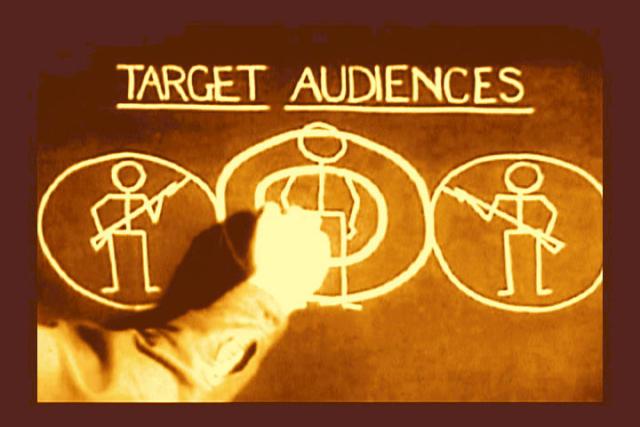
    The most basic tenet of any marketer is to connect the message to its intended audience.

    It’s that easy. It’s not that simple.

    Sacrificing Effectiveness for Relevance Maurilio Amorim

    My team at The A Group is currently working on a campaign targeting legacy donors: they have large-gift potential, are motivated by leaving a legacy behind, and are between 65 and 85 years old. A social media campaign is not going to reach them. Most likely, an email campaign will not do much better either. Traditionally, the “Builder” generation responds well to direct mail campaign with multiple pieces and telemarketing ( I can’t believe I just wrote down “telemarketing” but I did).

    I know that creating a new app would be a lot cooler than trying to print and stuff direct mail. Creating a dynamic microsite with viral videos and downloads is a lot sexier and fun than coordinating a telemarketing follow up, but they would simply not communicate with that target audience.

    Too many marketing teams in agencies, churches, ministries and businesses make costly strategic mistakes because they lose track of the bottom line. For the sake of  cultural relevance (“culture” as defined by the majority of the age group on the team, that is), they become ineffective to an entire audience.

    Marketers are not hired to be relevant. We are hired to be effective and to deliver quantifiable results in the form of sales, visitors, and traffic.

    If we can look cool while delivering the goods, than that’s a bonus. I’ve seen agencies win marketing awards for failed campaigns.  While creative directors and designers celebrate their trophies, the client laments a lot of wasted money.

    Are you communicating well with all the audiences you serve?


  • Church and Ministry Website Usage

    In ministry, as in business, the day and time of your posts matter. A good social media strategy is critical. Take a look a this infographic. There are a lot of implications for your church and ministry website strategy.

    church-infographic-iministries02121

    What statistic do you find most surprising?

  • Marketing and the Conversation Strategy

    In the new world of marketing and advertising, it’s not as much about your message as it is about engaging your audience in a dialogue about your message. Long ago marketing was all about exposing a product to the public. As competition grew and more products and services continued to vie for our attention, exposing a product was no longer enough. Marketers then began positioning it within a category or industry. They strived to place products in the minds of consumers by creating an unique promise, claim, or even story. But in today’s social-media drive culture, position is not enough. Consumers want a conversation with their favorite brands.

    Conversation

    Consumers now want, and will soon demand, marketing that gives them a chance to dialog with their brands of choice. It’s not enough for us to know the story behind our favorite car, soap, or burrito. We now want to be able to share our impressions, comments, praise, and ideas with the products we care about. We want to engage with the brands we love. While that might seem like a lot of work for brand managers, it has its rewards as well.

    Once I become part of the conversation with the brands I care for, I will gladly leverage my network for their benefit. Recently I have tweeted about Robert Graham shirts; I have posted the Chipotle commercial on my Facebook wall; and I have written a post about Southwest Airlines. These are brands that have engaged me in a conversation. They have reached out to me via Twitter or Facebook and have established a conversation, even something as simple as acknowledging a tweet.

    What about your marketing strategy? Have you begun a conversation with your consumers?  Are you ready to do so now?