Category: business

  • The Wow Factor and Recharging Your Creative Batteries

    No matter what you do, you need your creative batteries recharged from time to time. Creativity help us solve all kinds of problems and not just pick paint colors and furniture for the spare bedroom. There are a few experiences that have helped fill my creative tank. A few years back I took my entire family to  Cirque du Soleil’s show “Love.” It features the music of the Beatles and the cast of Cirque’s über-talented performers. It was an amazing experience–a double wow! The whole thing, from beginning to end, was just jaw-dropping. I won’t try to spoil the show and not do it justice by trying to describe something that needs to be experienced.


    It is intriguing to me how the creative minds at Cirque continue, after all these years, to surprise and give us the unexpected. As I was sitting in the theater waiting for the show to start, I was reflecting on my own expectations for the night. They were huge. I have been to 5 other Cirque productions over the years and my level of anticipation for what they do was extremely high. That’s not even taking into consideration my own critical nature–if you know me at all, you get this.

    So, there I was, sitting with my family after spending hundreds of dollars in tickets waiting to be wowed. And these guys blow me away. Every detail, from the lighting, the costumes, the amazing acrobatics, and the superb sound had been thought through. At times during the show, I laughed, other times I had goose bumps, and once I even cried–just because it was so beautiful.

    I love these experiences; no, I need them. I need them because they inspire me to move beyond my limitations and not to accept the status quo. They remind me that beauty matters and that it inspires and lifts our spirits. They motivate me to attempt something great.

    I want to challenge you to pursue something beautiful for your own sake. Go to a show, to the symphony, to a Cirque presentation. Whether you are an accountant or a creative director, you need beauty, and creativity in your life to help you grow and become better at just about anything you do. Trust me on this one.

    Where do you find inspiration? Where do you recharge your creative batteries?

  • Successful Surveys in a Time of Consumer Fatigue

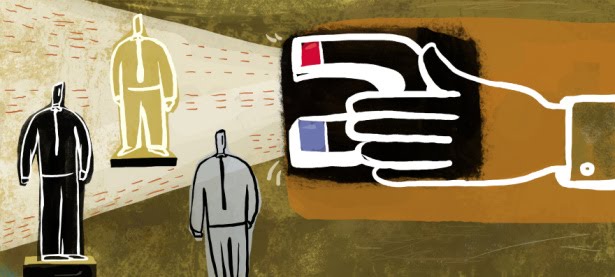
    The proliferation of customer satisfaction surveys is taking its toll on me. Once I was inclined to answer them. Now, I immediately dismiss the many requests for my feedback. According to an article in the NY Times, the exponential growth of the satisfaction survey is annoying consumers world wide. In the past, these surveys were an expensive proposition. Market research firms charged a lot of money to define, craft, and administer polls and to find a good representative sample of the target group. There is a lot of science and experience that goes into good quantitative and qualitative research. But with the advent of easy-to-use survey tools like SurveyMonkey, anyone can create a quick one and throw it online. What once was viewed as a privilege is now seen as a nuisance.

    survey fatigue

    So should you give up on getting feedback from the stakeholders in your organization? Of course not; but when doing so, consider the following:

    Keep it short. I mean short. What’s the essential information you must get? Most surveys are designed to get information to help shape a decision. You must decide the minimum required and make sure that’s the first thing you ask. While I, in responding to a survey, might  decide to answer three questions, I will not click through multiple pages. We no longer have the luxury of “warming people up” to the place they will give us what we need. If you fail to get to the heart of the matter soon, you might not get what you need.

    Incentivize. The busier and higher compensated your target audience is, the more you will have to pay for their opinion. Drug companies pay hundreds of dollars for medical doctors to give them feedback. Discount codes, coupons, and ebook downloads are all cost-effective ways to incentivize your audience to engage in a survey longer than a few simple questions.

    Feedback. I have never seen this done, but I would love to know what happened with the results of my survey. I once did a long survey for the marketing firm working on a Coca Cola ad campaign. It would be great getting a simple email back saying something like, “Thanks for being a part of our focus group. Click here to see how you helped shaped this campaign.” If organizations were to start this trend, I, for one, would consider answering surveys again.

    How often to you participate in a survey? Have you found yourself ignoring them more and more?


  • How Should We Manage Technology?

    How far into the future should your technology plan look? That’s a question I am asked often these days. Technology can be a capital expenditure for businesses and not-for-profits. It seems like yesterday I was sitting in board meetings considering investing in technology, websites, servers, and productivity tools that we expected to be useful for “the next 10 years.” Oh my, how times have changed. Unfortunately today I run into all sorts of limitation issues when clients who bought expensive technology 5 years ago want to continue to use it in today’s context.


    The proliferation and democratization of technology has taken innovation from the large software and hardware developers such as Microsoft and has moved them down to the level of a college kid who starts a little online tool for his friends based on an open-source platform we now call Facebook. It seems like every day something amazing has been created overnight by either Apple, the Google guys, or by a 13-year old kid in Sri Lanka. It doesn’t matter where it comes from, but change is coming at a neck-breaking speed.

    How should we manage this elusive technological curve? How should we look at investing in online tools, software, and servers? I think the answer is to become platform agnostic and not to expect any technological investment to last more than two to two and a half years; and that’s even pushing it. Really.

    Depending on your business or ministry, your website functionality should be evaluated every six months. Your overall site functionality should be assessed every 15 to 24 months and your front-end interface should change annually to keep it fresh and relevant. Consider purchasing only API-friendly (Application Protocol Interface)  software. In other words, don’t buy technology that doesn’t play well with others. The days of being held hostage by software are over.

    How well is your organization managing technology?

  • Sometimes Failure is Inevitable

    Some risks you cannot mitigate. Some decisions you can take all the right steps, speak to the right people, do all the research and you still end up with a dud. Sometimes a very costly dud.

    risk risky

    A few years ago we hired a technology consultant who came to us highly recommended by a high-end technology firm that had recruited some of our best talent. His credentials were as impeccable as his experience. His previous projects were much larger and complicated than the one we chose to embark with his guidance. This guy was a total package:

    He spoke high-level Geek.

    He was from out of town.

    He was tall and confident.

    He was expensive.

    He designed a very, very expensive cluster of servers that were supposed to make our lives easier and serve our clients better. It was a failure. A big failure. It was a cluster alright, but not the one we had hoped. It no longer lives and its servers and parts are scattered throughout our offices. To this day we are sill paying handsomely for it. The cluster was an expensive and painful experience.

    Years later, I am reconstructing the events that led us into that wrong path. Time has a way of giving you perspective, and since enough of had passed, I was hoping to find the erroneous choice, the unfounded assumption, or perhaps even the lack of due diligence on our part. But as hard as I tried to dissect the project, the pathology report was clean: we did everything by the book.

    Life is risky. There are inherent risks in everything we do, and sometimes we fail–even after doing everything right. I know. It stinks.

    Maybe you’re wrecking your brain to figure out what you did wrong, and how you could have avoided a critical mistake. You might come to the same realization I did today: that was nothing I could have done differently that would have made this a successful project.

    Have you ever been in this situation before?

  • The Trap of the Critic

    It’s easy for me to be a critic.  I grew up in a family that prided itself in finding what’s wrong with the world and each other. It was sort of a sport around the dinner table to see who would outwit the rest and deliver the best put down. We all laughed, but someone always got hurt.

    Now I’m a professional critic whose livelihood is partially funded by my ability to discern what’s wrong or what’s not working and help organizations move to the next level. This is a dangerous profession, and I’m very aware of the insidious negativity that can creep in and suck the life out of every experience. I have to work hard on being positive because cynicism and negativity are the first ones at the gate.


    When the critic in me starts to take over my heart, I go back to the words of Henri Nouwen. He taught at Harvard and Yale and gave up his career to work among those who were severely physically and mentally challenged. This is what he writes about an angry man:

    He sat in front of me. He was in his early sixties. The deep lines in his face, his unkempt hair, but mostly his burned-out eyes showed he was a very unhappy man. We talked about the weather, “It’s hot” he said, “Much too hot, I can hardly breathe, the humidity kills me.” I tried to cheer him up a little by saying, ‘We can use a little sun, and the humidity, well think of it as a free sauna.’ But he did not hear me. No smile came to his face. He began to talk about a colleague who left him many years ago. About a friend who had not called or written to him for two months, and about his neighbors who kept him awake during the afternoon when he wanted to take a nap. My presence was little more than an occasion for him to pour out his many complaints.

    He pointed out to me the corruption in our government, the war in Bosnia, the hunger in Somalia, the violence in South Africa. “The world is falling apart all over the place”, he said, “the television, the radio, the newspapers, they all show it. And they don’t even show the full truth.” I felt a sensation of darkness creeping around me. Where is this darkness coming from, I wondered. I am face to face with an angry man.

    I don’t want to end up like the angry man and those whose lives are dedicated to criticizing, denouncing, exposing, and judging people…whom most often, they don’t even know. Sadly, the internet has given all of us a perfect dark place to hide and hate.

    I don’t want to be a cynic. I don’t want to see the glass half empty.

    I fight the tension of seeing what needs to be improved and of becoming the critic who cannot find good in much of anything. This post is mostly for me. I need to be reminded from time to time the reason for what I do, and that regardless of all that still needs to be done and improved, I need to find the heart inside of the critic, the altruistic purpose for the change.

    My prayer is that I don’t become the angry man Nouwen encountered and that my words would propel people forward instead of steal the joy out of what they do.

    How have you been impacted by a critic in your life?


  • Selling and The Art of Persuasion

    Often the difference between success or failure in a meeting lies on how to read or work the room. The best presentation tools cannot overcome the dynamics that often come to play underneath the surface. While there’s an art element to persuasion, there are also some skills that can be learned. Next time you are selling an idea, a project, or just yourself, consider the following:

    persuasion

    Find a personal connection. We do business with people we like. We hope they can deliver the goods. Don’t underestimate the power of a personal connection in a professional setting, especially if you’re selling…even just an idea. I have created strong bonds with perfect strangers after a few seconds of discovering that we both like to run, or that we have teenage children the same age, or that we both love the carrot cake at J. Alexander’s. I believe that people innately want to make friends and are looking for reasons to bridge the gap – from meeting a stranger to making a friend. Help them do that by asking probing questions and finding common ground.

    Find a professional connection. Knowing respected people in business or ministry that help to legitimize or validate your credentials is critical on winning over decision makers. This should be natural and part of the conversation. The danger is to name drop for the sake of making yourself look good. That’s not only annoying, but it often backfires and repels the very people you’re trying to impress. You have to sell your credentials without selling them too hard.

    Don’t assume you know who the decision maker is. If you don’t know the group you are presenting to, don’t assume the highest ranking person is your target audience. In my experience the “boss” is not always the one making the final call. As a CEO, I delegate a lot of important decisions to my direct reports. It annoys me, and them, when a sales person will direct every comment and question to me as if no one else in the room mattered. You are not going to sell me using this approach.

     What else would you add to this list?


  • Managing Expectations: The Importance of the Weakest Link

    Managing expectations is critical in every organization. But it is especially important in the service-oriented businesses where one’s last experience can ruin years of a strong reputation. I was just reminded of how important that is during dinner out last night. Sometimes it is not the big things that can ruin an experience, but a careless decision that puts your entire team at a loss.

    I met with some co-workers and a client at one of Nashville’s most celebrated restaurants. My out-of-town guest is a foodie. He has eaten his way through Europe as well as some of the best restaurants in the US. I was hoping to make a good impression of Nashville and what we had to offer. He and I were immediately drawn to one of the chef’s signature dishes: the miso crusted sea bass.

    Managing expectations

    We were promptly told that even though the menu said sea bass, the actual fish was grouper. For environmental reasons, the restaurant decided to no longer serve the endangered fish. I guess that for the same environmental decisions, they decided not to reprint the one-page menu either. “Our new menu is coming soon,” our server told us. However, it has been months since the sea bass had made its exit from the kitchen.

    Grouper is not a bad fish. But it’s not the same quality as the sea bass, not even by a mile.  My client politely asked, “so are you charging less for the grouper?” No, they were not. The poor server trying to save face quickly offered hope, “it tastes just as great the way we prepare it.”

    At that moment the dynamics of the dinner changed. The expectations placed on the kitchen staff to deliver a superior quality product (sea bass) but with inferior ingredients (grouper) was unreasonable. And they failed.

    The three of us who ordered the dish expected the expensive taste and texture of the high-cost item we had ordered. We got the best of what the inferior option could be, but, unfortunately, it was not good enough. Under those expectations, it could never be.

    I am certain that there are more than the three of us who were disappointed with the execution of the dish. Over the course of several weeks, others, too, had the same expectation. They looked forward  to a $30 worth of taste; instead they got something that should have cost around $20. I am not sure how much it would have cost the restaurant to replace the printed menu, but I know it would be a lot less than the brand-erosion such sloppy management decision has cost them.

    Managing expectations is a difficult but critical part in every organization. Millions of dollars in building, state-0f-the art kitchen,  modern decor, a great staff, and even competent cooks could not overcome something that could have been avoided by spending a few dollars on a new menu insert. Interesting how often you are only as strong as your weakest link.

    How well is your organization managing expectations? What kind of customer experience are you creating?

  • Successful Businesses Don’t Really Exist

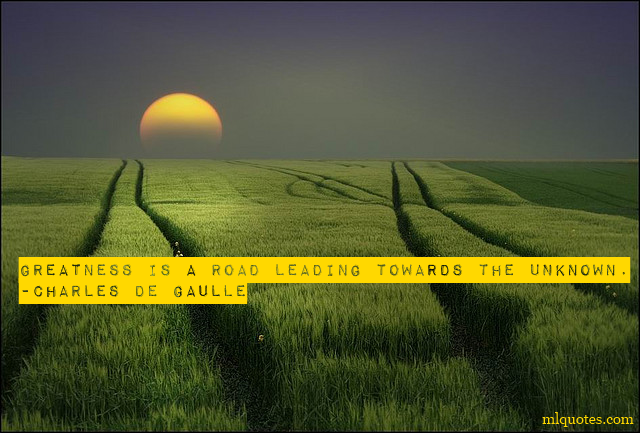
    “Great companies don’t really exist. What we have are great people whom collectively create successful businesses and organizations.” That was the heart of my presentation this week to our entire staff. As I tried to distill Jim Collins’ Good to Great into an hour lecture the bottom line because clear to me.

    greatness

    According to Collins, breakthrough organizations not only have the right people on the “bus” but also have them in the right seats. According to him, that’s one of the most important dynamics, if not the most important, in creating truly successful  businesses.

    While it’s easy to talk about “the organization,” I think we easily forget that like a family, a church, a community or any social entity, a business is comprised of first and foremost of people. The more competent and dynamic the team is the more successful the organization becomes. It’s not a complicated concept.

    But let’s take a step even further back. Let’s not talk about “people.” Let’s talk about “you.” If your place of employment were to be evaluated through your level of performance, how well would it rate? If the growth of your company could be directly tied to your personal and professional growth in the past year, how would that growth chart look?

    It would be disingenuous of us to complain about the state of the organization we work for if we are not willing to put our own growth, performance, attitude and productivity through the same measuring protocol. Regardless of today’s accomplishments, if each individual team member is not growing, then the organization as a whole is not growing. The question then is how am I contributing to creating a successful business?

    I challenged myself and my team to answer the question that I will ask you to consider:

    What am I doing to become great professionally as well as personally?

  • The Tyranny of the Urgent

    “I’m already overwhelmed in my job. I have no time left to write a blog post, create a conversation on Twitter, or engage in a Facebook discussion.” I hear it quite often these days.  I understand people’s frustrations. We all seem to be tapped out. My answer is simple: you must let go of the urgent and not important and focus on the important but not urgent.

    Easier said than done.

    The urgent always demand our attention, whether or not it warrants it. It’s the “needs immediate attention” email you get in the middle of the day, or a “crisis” a client is having you must attend to. Much like disgruntled church members, the “urgent but not important” tasks fill our days and rob us from doing what we should be doing but, unlike its obnoxious counterpart, the “important but not urgent” will not grab us by the neck and yell, “deal with me.”

    Ultimately, however, the “important but not urgent” is where breakthroughs happen, where possibility and creativity flourish and where our time is best spent.

    As I was telling a room-full of people to stop dealing with the urgent, I felt convicted to heed to my own advice and to take inventory. So, I’m asking you and me the question:

    What’s urgent and not important in your life you need to addrees?