Category: business

  • Before Creating an App, You Need a Mobile Strategy

    Many of my current conversations start with “we need our own app.” I usually answer this question with one of my own, “why do you think you need an app?” The usual answer is something similar to what junior high boys give their parents when they want a new game console: “All the cool kids have one.” But before you try to keep up with the cool, rich kids of technology, I would suggest you take a step back and think about creating a mobile strategy first.

    mobile devices and strategy

    Much like creating marketing pieces without an integrated marketing campaign is not a smart idea, creating apps without first designing a mobile strategy is not a good move. Sometimes your best app is not an app at all, but a killer mobile version of your site.

    Recently, Google put out some good thinking on mobile strategies. Following are 4 questions you should consider when crafting your mobile strategy:

    How does mobile change our value proposition? Define your value proposition by determining what your consumer wants to do with your business in mobile then benchmark against others in your industry for ideas.

    Is our organization adapting to mobile? Assign a mobile champion in your company and empower them with a cross- functional task force.

    How should our marketing adapt to mobile? What is the experience like for a consumer trying to find you and connect with you? Take 5 minutes today and search for your brand in mobile as a consumer would. Discuss the result with your team.

    How can we connect with our tablet audience? Check out your web experience on a tablet. Take 5 minutes today and search for your brand on a tablet as a consumer would. Maximize the tablet format with rich media creative.

    How much thinking has your organization done on your mobile strategy?


  • The Case for My Smallest Office Yet

    The A Group has just moved into its new offices. This is the third, and the largest, office space I have helped design for my company; however, this is the smallest corner office I’ve had since the beginning of our company 10 years ago. The shrinking of my personal space and the growth of my company is both symbolic and practical. It’s been a slow learning curve for me to lead a growing group of highly talented professionals. Here are some thoughts about my shrinking office:

    Executive corner office

    The A Group is much more than the sum total of my skills. At one point I ran a business that was mostly, if not solely, dependent on my abilities. When you hire smart people, they will not stay around unless you allow them to grow, find their place, and make their unique contribution. You cannot do that if you believe that every great idea must come from one source, and that being you. I’ve watched my team flourish over the past years and continue to do so.

    It is important to put our resources where it will best serve the organization. No one in our executive team, including me, got new furniture for their new offices. But we bought state-of-the-art Herman Miller workstations for our entire tech team. After years of working shoulder to shoulder, these guys deserved the upgrade. The executive team unanimously decided that it was the best way to invest our resources.

    I am more secure than ever before in my team’s abilities to do amazing work instead of my personal brand. The entire organization has become the source of my professional pride and not my over-sized office or ego. I’m not saying that if you have a big office, you have a big ego. But it was true for me. And while my ego is still rather large, I have realized that the quality of what we do is more important than the wow of a large corner office.


  • The Fun Theory

    Intuitively we know that the more fun we inject in activities, the more likely people are to respond positively to them. When my boys were small I used to play let’s-see-how-fast-we-can-put-up-the toys game. They would clean the room in a matter of minutes as opposed to the whining and gnashing of their teeth that would be manifest during other chores.

    This video is another reminder that people will choose even a more difficult path if we make it fun.

    Where have you experienced the fun theory at work in your life?

  • You Can Cultivate Talent But Not Teach It

    You can cultivate talent, but you cannot teach, coach, or even motivate people into developing skills they do not posses or are not naturally gifted. I used to believe that with enough effort, people could do anything they want. After all, I was told growing up that I could do anything I wanted to do as long as I set my mind to it and worked hard enough at it. Well, that’s a lie. A big fat lie.

    talent

    One of the reasons for whatever success we have seen at The A Group rests in our ability to hire talented people and challenge and resource them to continue to grow. I’m proud of the work of we do, but I’m mostly proud of the team that output so much quality. I have seen companies twice our size that are not able to accomplish as much.

    Here are some skills you cannot teach people:

    attention to detail
    pride in their work
    eye for design
    desire to learn
    problem solving skills
    conscientiousness
    hospitality

    While some might argue that with enough training and coaching you can help someone do most anything, my experience tells me that’s a waste of time, resources, and a huge frustration for both parties. Do it right in the first place. Find the talent or skill set you need and put your efforts into growing someone instead of trying to shape them into something they can never become.


    What else would add to this list?

  • Work that Makes a Difference

    I love the fact that what I do for a living matters.  I could make more money if the core of my business served more corporate clients instead of not-for-profits, churches, authors, and Christian publishers. But I know I wouldn’t be any more fulfilled than I am today.

    Walking side by side with men and women who have given their entire lives to serve others has been humbling and yet so rewarding. As I spend time in Europe with people who have given their lives to bring hope to the often called “dark continent,” I’m reminded that what I do and what my team does is making a difference.

    My prayer today is that you’ll look for ways to live out your dreams and find the courage to seize the moment when opportunity presents itself.

    If you were able to chose any profession or line of work you want, what would you be doing today?

  • An Amazing Dinner Experience and Why Details Matter

    It was perhaps one of the best meals I’ve ever had. And I have had a lot of good meals. Restaurante Casino is top rated by Zagat. I made reservations based only on the reviews I read on my phone, hours before flying into Madrid. I had high expectations, but was not sure what to expect. The experience exceeded my expectations by a mile.

    While the food tasted great (all 15 courses), what made the overall experience unforgettable was the attention to every detail from the moment I called them to the last goodby as a couple of the staff escorted us to the VIP elevator.

    “Just a reminder, jackets are required for gentlemen” said the voice over the phone on a courtesy call on the day of my reservation. In the sum total of my valuation of the night, I think about the food as much as I recall the attentiveness of the staff, the decor of the building, the fresh flowers, the smiles, the fact that upon asking for the restroom I was escorted to it, even though it was not necessary. I asked if I could keep the menu so I could follow my dinner along and within a few minutes our waiter appeared with our customized printed version of our meal. I have never experienced that before.

    For all practical purposes we were two American tourists who might never return to the restaurant. But for those 4 hours, I felt like European royalty. Yes, it was very expensive, but worth every penny.

    Casino restaurant Madrid
    Restaurante Casino – Madrid
    Casino restaurant Madrid tabe side drink
    Why bring a refreshing drink from the bar when you can mix one with dry ice at table side. Impressive and delicious
    Casino restaurant Madrid liquid ham crockette
    I don't know how the chef did this, but this "liquid ham croquette" burst into my mouth with the wonderful flavor of Iberian ham.
    Casino restaurant Madrid Norway lobster with quinoa and almod soup
    Norway lobster with quinoa and almond soup. As tasty as it looks.
    Casino restaurant madrid frozen bombon
    The frozen bombon "hid" inside three different types of ice cream. Oh, my.
    Casino restaurant Madrid tea cart
    Now that's a tea cart!

    What kind of experience is your organization offering those who come to you? While your main product might be good, how are you doing with the details?

  • In Business, Being Available is Often All You Need

    Organizations are always looking for a competitive advantage that will get them more consumers, clients, or traffic. After all, times are difficult and most businesses, specially retail, are in survival mode. Often it is not the latest social media strategy or expensive marketing campaign that is the difference between winning or losing a sale, but making sure we do the basics well that will make the most difference.

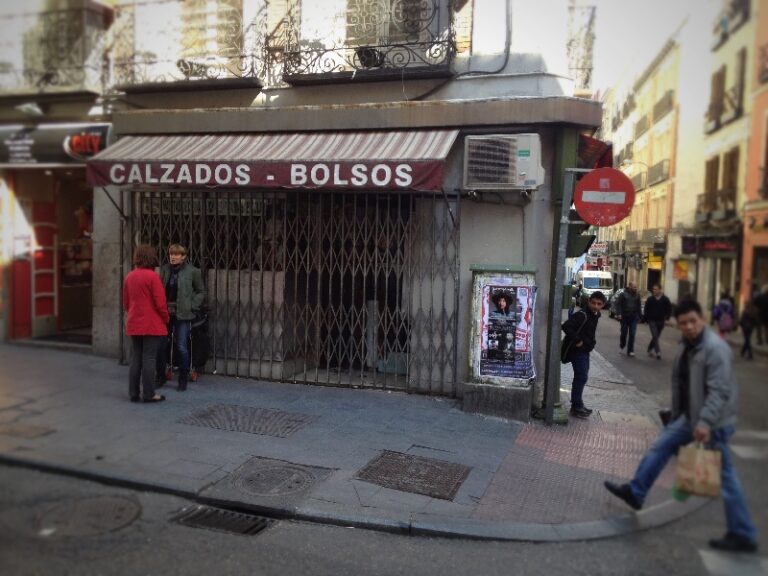
    Madrid Store business basics

    My traveling companion’s computer bag ripped. Yesterday afternoon we walked the streets of Madrid looking for a replacement. We had passed a store with a great selection and reasonable prices, even for Europe. After lunch we decided to purchase a bag there. We arrived at 4:30 pm and the store was closed for “lunch” (the Spaniards take lunch around 2:30). They were not set to open until 5:30. We walked a couple of blocks and bought a more expensive bag from their competitor who decided not to close for lunch.

    The experience re-affirmed one of the basics tenets of business: sometimes being available when people need you is a primary issue. There is no substitute for convenience, after all.

    Think about your organization. How convenient are you making it for your clients, customers, member to “do business” with you?

    What areas are you doing well and what should you improve?

  • Why You Should Start a Business During Down Times

    On a recent flight, I sat next to a man who had just started a new business. Unless you’re in Brazil, India, or China, starting a business anywhere else in the world at this moment is a difficult proposition. The recession has not subsided and economic indicators are all over the place. My new friend, Mike, is creating incentive management software for auto sellers. Nissan is his first client. What a way to get started by landing a big fish…no, landing a whale. But then I thought about when I started my own business and decided that this is a perfect time to start a new venture.

    Opportunity

    I started The A Group ten years ago this past November, a couple of months after 9/11.  I have learned big shifts in the economy, such as our current recession, create openings in opportunity because it often changes the rules of the game.

    Businesses, ministries, and churches don’t make major changes when things are going well. But when the rules change and  fat margins are gone, or speed is of the essence, the usual players often can’t make the change fast or cheap enough to be competitive. If you can figure out where the opportunities are and how to do what the big guys were doing but faster, cheaper, or in a new way, then it’s time to break free and seize the moment.

    If you have an entrepreneurial heart, this could be your chance to zig while others zag, to sprint while the bloated old guys crawl as they pay for a study to analyze the market conditions and give them enough data to put a matrix team together to discuss the viability of . . . you get my point.

    What business or ministry opportunities do you see that have been created by the recession?

  • 3 Questions You Should Answer Before Launching a Website

    “We have a technology problem.” Words I often hear from a client or potential client. While that might be a valid concern, most of the time it’s not the technology problem that’s causing the issue, but a communication one. My company, The A Group, has a technology division where we have developed a sophisticated platform for media-rich tools as well as a powerful and easy-to-use content management system. While I’m happy to sell our products to anyone who needs faster, easier, and overall better technology, I’m always careful to make sure people understand the it’s the communication strategy that drives the technology and not the other way around.

    This might sound simplistic to some, but I can tell you from personal experience that many churches, businesses, and not-for-profits believe that a shiny new website, a powerful digital media tool, or an iPhone app will cure their communication problems. They won’t.

    What usually happen in the absence of a communication strategy  is that the new technology gets misused, or worse, underused because there’s no plan or a champion who understands how to use it. So before spending money on a new website or technology, here are 3 questions you should ask:

    What do I want this thing do to? Sell products?  Gather leads? Create community? Share media? You need to have a clear vision for your new website or project. Remember, however, that the more things any one system is designed to do, the more complex and potentially less effective it becomes. But regardless, you must answer what’s the “win” for the site.

    Who will be the champion for this project? I’m not talking about a technical position here. This is not a question about technology, but about strategy. Who understands the DNA of the organization to make sure this initiative will look, feel, and work like it should. In my experience when IT (information technology) drives the project, development focus on platforms or the latest development technique and not on the end-user and their experience, where it should begin and end.

    What’s our sustainability plan? Once a project goes live, whether it’s a site or an app, it’s only the beginning. Who are the people responsible for content? What’s the social media elements of the site and who’s going to monitor them? Oftentimes when clients create a media-rich environment and become successful at attracting high traffic, they have to deal with unplanned bandwidth costs. (Think of bandwidth as virtual pipes in and out of your website. The more users you have the bigger the pipes have to be.) If your vision is to give your content for free, that’s great, but you need to figure out a way to pay for it.

    What has been your experience with technology in the workplace? What have you learned?

  • Closing the Deal and the Audience of One

    In a sales presentation, you need to know who the decision maker is. And if you’re going to succeed, you must get that right.

    I have been in situations where I have presented to a room filled with people but I also understood that ultimately, the decision maker would make that call by himself. In a room of 20 people the opinion of one trumped the 19. Had I not known it, I would have missed the mark on my presentation.

    sales audience

    Next time you need to make a compelling case for an idea, or a product, you must identify the decision-maker in the room. However, do not assume it’s the boss. The ultimate word sometimes comes from an influencer who might not be the highest ranking person in the meeting. I learned that as an young music director. While on paper I was “in charge” of the music program of my church, I knew that Rosie, the long lasting, long standing, and revered organist was the decision maker for that group. It took me several years before I was able to retire Rosie and take leadership of that group.

    Not all decision makers are alike. Here are a few profiles:

    • The Dictator. Old school and in charge. It’s her way or the highway. If she wants your opinion, she’ll give it to you.
    • The Consensus Builder. He needs buy-in from the entire team. Unless everyone is happy or mostly happy, the deal is not going forward. Be prepared for a long sales cycle.
    • The Intuitive. You never know what’s going to trigger the “good feeling” or  the “gut check” with this type of leader. Get ready for a ride. It could be your best and worst presentation or even both at the same time. You might have to throw reason to the wind and come up with your own closing “vibe” angle.
    • Mr. Happy Pants. Worst of all of them. He loves everything and everyone. Your presentation will get great reviews and you might even get a hug. Closing the deal will be a challenge because since everyone and everything is great, nothing becomes priority. You enjoy being with them, but there’s never resolution. Mr. Happy Pants will frustrate, well, the pants off you.

    Who did I forget?