Author: Maurilio Amorim

  • Even Runners Need Etiquette

    Saturday mornings I do my long run with a group of runners. We meet at the Gates of Percy Warner park in Nashville, TN. Percy and Edwin Warner parks feature 2,684 acres of some of the most beautiful woods in Tennessee. Lot’s of runners make these parks their favorite running grounds along with my running group. I’ve noticed a trend lately that has me a bit miffed. Runners who are coming opposite side from our group who look us in the eye but won’t acknowledge our gregarious “good morning,” or a friendly smile followed by a wave if the runner has ear plugs in. That’s just plain rude.

    I haven’t seen a guide for runner etiquette but I’m sure there’s one somewhere. Here’s a few rules that should be in it:

    1. If you make eye contact with another runner, smile or wave or say hello or maybe do all of them, just don’t stare them down as you cross paths, unless you’re a northerner running up north. If you’re a northern transplant in the South then this rule applies.

    2. Runners run facing traffic. I’ve run facing traffic while another runner in front of me ran on the right side of the road. An incoming car got distracted looked at the other guy and almost took me out. I had to jump in a ditch at the last minute. At my age, ditch jumping is not pretty.

    3. If you’re running with a group in a busy street, stay single file as close to the edge of the road as you can. Often groups of runners feel like they own the road. You don’t. But also drivers should move as far from runners (and cyclists as well) as possible. If there’s no traffic coming towards you, it’s ok to cross into the other lane to avoid hitting runners. I almost got clipped today by someone driving a Buick. (notice I didn’t say an old person, but hey, it was a Buick. Case closed).

    5. If someone in your running group is having a bad day and they can’t run as fast as the rest of the group, then take turns running alongside your slowest friend. It’s good for the entire group to “share the love” instead expecting a single runner to stay behind, or worse, leave the weakest link to fend for himself. Yes, I’m talking about me.

    6. If you’re going on a long run, bring water. It’s ok if you occasionally forget and mooch off some one else’s water, but making a habit of not bringing water will get you off the running team’s email list in a hurry. No one wants your germs.

    7. Don’t eat chocolate before a run. Ok. that’s just a personal reminder of a running tragedy after I ate chocolate and went for a 10-miler. No, I didn’t finished it.

    8. If you sweat like crazy, make sure you run behind or to the side of the group. We don’t want your sweat flung our way.

    9. Group running is therapeutic. If you don’t want to hear all the drama in your running mates lives, run alone.

    10. If you have women in your group and an attractive female appears on the scene. Do not acknowledge her in any way form or shape, specially shape, or your running partners will turn on you and shun you from the group. So I hear.

    This is by no means comprehensive. What did I forget?

  • Stop Lying. Your Children Need the Truth

    Tim Elmore’s new book “Generation iY” has messed me up lately, particularly the chapter on amending the lies we told Generation iY. According to Tim, these are well intentioned platitudes we say to our children in order to encourage them, to build their self-esteem but at their core, they are lies that will potentially wreak havoc as kids get old. According to him, “we have lied to manipulate, and often we have lied out of love. We’ve even taught young people to lie to themselves. . . in ways that will eventually sabotage them as a young adult.”

    Tim Emore Generation iY Lies we tell our children blog Maurilio Amorim

    Out of Dr. Elmore’s list of seven lies, the one that hit me the hardest was:

    You can be anything you want to be!

    Wait a second Tim, isn’t this part of the American Dream? Don’t people risk everything to come to America so their children can grow in a place they can be anything they want?

    But the trouble is that wanting something and being able to achieve it are two very different things. “Desire is not the same as talent, and talent is not the same as accomplishment,” says Elmore. And he is right. If you want to see the consequences of this lie, just watch an audition show of American Idol. It’s eerily sad to see parents encouraging tone-deaf children to continue pursuing a dream that’s just never going to happen, no matter how much affirmation the kid gets.

    I love my boys, I want them to think big and I don’t want to put limitations on their lives. But more importantly than blindly telling them that they should strive for an NFL career if that’s what they really want, I need to help them align their strengths with opportunities. I need to help them discovered their sweet spot where they’re most likely to do well and grow in it. Working in an area of one’s weaknesses is exhausting, frustrating and often leads to failure.

    So how do you deal with situations where the truth is not what the young person across from you wants to hear?

  • Hipster vs Polyester Christianity and the Cultural Trap

    Every church movement in America, and around the world for that matter, has its share of critics. Friday morning I read a Wall Street Journal article by Brett McCracken on the perils of what he entitles “Hipster Christianity” . In this summary of his recently-released book, which I have not yet read, Mr. McCracken condemns Christian leaders for trying too hard “to rebrand Christianity as hip, countercultural, relevant.” He even names a few churches as examples of what he calls “cool churches,” saying at the close of his article that “as a twentysomething, I can say with confidence that when it comes to church, we don’t want cool as much as we want real.” I’m glad Mr. McCracken knows what he and his generation want, but whose job is to define what a “real” church looks like? Mr. McCracken and his generation of anti-hipsters? The Baby Boomers and their love of big churches? Program-driven denominational leaders?

    Hispter vs Polyester Christianity Maurilio Amorim

    In my work as a church consultant over many years, I have visited hundreds of churches services from high-church, liturgical to barking-in-the isles pentecostal and everything in between. I even experienced a few liturgical/pentecostal services. Yes, such a thing does exist. Interestingly, I’ve heard arguments from church leaders and critics about “methodology vs theology,”  “seeker vs sacred,”  about “conservative vs liberal” and on and on until I’m really not interested in such discussions any longer. They lead nowhere productive.

    I’m sure most of us agree with Mr. McCracken that we all want our church to be “real.” The problem is that unless we have a Biblical perspective of what God wants from us, then “real” is defined by the most persuasive critic, by popular vote, or even by young thinkers challenging the status quo; none of them necessarily biblical options. When considering the role of the church, I often think about the last words of Jesus before ascending into heaven:

    Therefore go and make disciples of all nations, baptizing them in the name of the Father and of the Son and of the Holy Spirit, and teaching them to obey everything I have commanded you. Matt 28: 19,20

    It’s clear that Jesus wants his followers to pursue those outside the faith with intentionality, to go wherever they are, even in foreign lands, and not only to understand their new-found faith, but also to become something more than Christian thinkers: to be identified with the Christ they claim to follow by their actions and lifestyle.

    The ultimate test of an effective church cannot be measure by its style, size, hipster quotient, or even biblical knowledge of its members, as important as that might be. The mark of a “real” church, regardless whether its preacher wears skinny jeans or a polyester suit, is that of a transforming agent for God. “Are we creating true followers of Christ and not merely fans of Jesus? Is life transformation part of the DNA of this church? How can we be salt and light to this community and to the world?” These are the important questions to me.

    If you want to leave your current church because the music is too loud or your pastor has begun shopping at the Buckle, than that’s your prerogative. But before you exchange it for a choir and pipe organ, or for the ultra smart double PHD preacher down the road, make sure the byproduct of membership in your new church is not just a better experience tailor-suited to your tastes, but by a transformed life–one that’s characterized by a radical devotion to a man named Jesus.

    What compels you to continue attending your current church? or if you’re not attending anywhere, what would it take for you to visit a church?

  • Vienna: I Barely Knew You

    Last month I spent a few days in Vienna, Austria working with the TWR’s European team. While I didn’t have a chance to enjoy much of what has to offer, I put together a quick slide show of pics I took with my iPhone. The music comes from Vienna’s own Mozart, of course.

    Belvedere Maurilio Amorim Austria Vienna

    I now want to get back to Vienna to explore more of this beautiful city.

    Where have you been that you’ve said to yourself, “I’ve got to get back here!”?

  • How to Speak International: Communication in a Global Economy

    It’s a small world after all. And I’m not talking about the never-ending, annoying Disney ride that can drive you insane. In the global economy we now live in, you’ll eventually have to work with people from different countries and cultures. This year alone I have been in Hong Kong, Sao Paulo, Singapore and Vienna working on projects and have seen first hand what a global economy looks like. Clear communication across the entire world has never been more important. As a communication professional, I often find well-meaning people commit grave errors because they don’t understand the cultural implications within a discussion. Most of the time, words alone fail to give you the true meaning of an international exchange. There are some lessons every business professional, pastor or even mission-bound volunteer should learn before they blow a deal, an exchange or, worst, start a war.

    Global Communication Maurilio Amorim Blog Post

    Bad translations will derail any negotiation. While accurate translation should be a given, I’m amazed at how many times meetings go south when the interpreter misses a nuance or a slightly different word usage and translates a concept incorrectly. If you’re in a situation where someone else is translating, make sure he or she understand the culture more so than just the pure language. On my recent trip to Vienna, our European host had my team eating at  “Heurigen” most every night noted on our advanced agenda. If you know me, you know how much I like to eat, and the idea of going all the way to Austria to eat at the same restaurant was just killing me. I must confess, I whined about it, a whole lot, only to find out “Heurigen” is a description of a winery-based type of restaurant in Austria. Every night we were treated to a different “Heurigen” with delightful specialty foods and their own specific wine. All my whining was unjustified because I miss understood one word. But in a tough negotiation setting a mistranslated concept can derail more than your dinner plans.

    You must understand cultural values when engaging a potential business or ministry partner. Ok, these are over-generalizations and I’ll probably get hate mail from making some of these comments, but unless you understand certain underlying cultural values, you won’t be able to  engage successfully in business or ministry. For example, Brazilians will not likely trust you unless you’re able to go out with them after work, eat a late, late dinner of grilled meat (at least a half a cow) and party until wee into the night. Germans value precision, and a strong work ethic (a German-Brazilian combination will work and party you to death. Trust me. I know). Asians don’t like confrontation and hate to be embarrassed, so brash tactics can backfire quickly. Most cultures are not as loud as we, Americans, are. During my recent trip to Austria, the 3 of us from the US were responsible for 90% of the volume in public places. So be careful not to come across as a loud-mouth, know-it-all. Unfortunately, Americans have gotten that reputation and too often deservingly so.

    Nothing replaces a face-to-face exchange. With the advent of email, video conferencing, Skype and other tools, it’s easy to get on an international call and have people from different continents participate. We do if often at The A Group; however, there are times that the wise thing to do is to spend the money, get on a plane and meet in person. Technology has yet to create a tool that allows us the same benefit of interacting with people who are so much more than a title, an avatar, or even a two-dimensional video representation of a complex, wonderfully created individual who needs to be experienced in order to be understood. Most conference calls I find myself waiting for my turn  in order to make my point and drive my agenda forward. Sitting across the table during an honest exchange with someone forces me to live in their moment, not just mine.

    What has been your experience in a cross-cultural situation?

  • The A Group Brand and Development Division: Answer to a Modern Problem

    When I first began The A Group some nine years ago, it was designed to fit a need within the Christian landscape for strategic marketing solutions. Being strategy driven instead of product, we birthed The A Group Technologies as communication shifted from print to online, to social media and now into mobile platforms. We have worked with authors and publishers from early on, but over the past few years the publishing world has gone through a major transformation as more and more content providers and brands try to navigate uncharted territory. The A Group Brand Development is our answer to that need.

    Whether we’re working with an established brand or an emerging one, we’ll help our clients in these key areas:

    • To find the intersection between publishing, marketing, and technology that elevates the brand
    • To fill the gaps in a confused, changing industry
    • To emotionally and intellectually connect mission and message to market place need while being effective, relevant, and authentic.
    • To use agile team dynamics to maximize emerging trends
    • To leverage our technology to create platforms that can fulfill all aspects of driving message and products.
    • To focus on the entire brand and not only on a single product.

    But a promise is only as strong as the team behind it, and the most dynamic part of this new division is its leader: Tami Heim.

    Besides being one of the most delightful people you’ll ever meet, Tami has served as the executive vice president and chief publishing officer at Thomas Nelson Publishers and president of Borders, Inc. Her experience in retail, publishing and working with international brands allows her a 360° view of a changing industry. I’m honored and thrilled to be working alongside Tami and her wealth of knowledge and experience.   Shannon Litton, who’s been a critical part of The A Group since its inception, joins the team as part of the strategic team that together brings over a combine 60 years of experience to our clients.

    Our business environment is changing, and we are changing to meet its new challenges and great new opportunities. We’re already seen some amazing results with some of our new strategies, but that will be the subject of another blog post.

    What do you see as the biggest challenge or opportunity in publishing today?

  • What Should You Do Next?

    Somedays I walk into a new week with purpose, a long “to do” list and begin to knock it out. But then there are days like today. I’m sluggish, a bit unfocused, didn’t plan the week well, and I’m not sure what to tackle first. In these unplanned moments, my reaction is to find the busy work that will inevitably appear out of nowhere and fill my entire day and do that. But instead, I decided to stop and ask the one question I should ask myself most days:

    What should I do for my business that only I can do?

    I’ve been asking that questions for years now and because of it, I have stopped doing a lot of things, such as fixing copiers, designing brochures, writing checks, troubleshooting IT problems and a number of other important things that other people can do, often much better than me, and have focused on a few things that only I can and should do for my business.

    If you answer the same question, what would you stop doing? Be honest.

  • My First Wedding Video Shot With My iPhone4

    I’m in Brazil for a few days with my family as well as attending my brother’s wedding. I forgot to take my Flip video camera to the wedding, but I realized my new iPhone 4 shot video (my old 3G phone was not video enabled). Armed with only my iPhone, I took footage and pictures of the wedding and put together a quick video.

    In this short video you’ll see family, young and old, having a good time–a very good time indeed. And true to Brazilian form, when two or three are gather together, there shall be a celebration.

    Is your family loud? How do you describe your get togethers? Mine are extremely gregarious to the point of being obnoxious and scaring reserved people like Canadians.

  • Traveling Well: Tips from a Weary Traveler

    I travel a lot. A whole lot. Until recently most of my travel has been within the US but this year I have been all over the globe. Right now I’m writing this post somewhere over Russia. There’s an art to traveling well, even if you can’t go first or business class as is my case right now. Here’s a few thoughts on the art of travel.

    •  Book an exit row or bulk head  seat (some airlines charge extra for those seats). The extra leg room is really helpful on a long flight.
    •    Board as early as possible.  Boarding early secures you the overhead bin near you. They fill up quickly specially on overseas flights.
    •     Dress for comfort. Make sure you wear comfortable clothing and specially footwear since your feet will swell up during long flights.
    •     Wear dark colors. You never know when you or someone next to you will spill something. Coffee stains look a lot better on jeans or black pants than it does on kakis.  Dark colors do better than light after you’ve had them on for a couple of days as I have learned on this trip. (note as I wrote this I was 17 hours of a 36-hour trip to get home. I was not able to change clothes during the trip)
    •     Wear layers. I like wearing a coat on long trips to help me keep up with my travel documents my passport while keeping me looking sharp after a long trip.
    •     Bring noise reduction headphones. My Bose headphones have been a life saver. They have protected me from screaming babies, obnoxious seat mates and from the low rumble of the plane engines while providing great sound quality. It’s money well spent. And besides, the music from Glee sounds amazing on the Bose.
    •     Buy a traveling neck pillow. On long flights the neck pillow is a wonderful invention. It supports your head while allowing you to sleep. I bought the tempur-pedic version. It costs more but offers great support. On short flights, however, they make you look like a dork who doesn’t get out much. So use it wisely.
    •    Buy an iPad. Ok this might seem extreme, but on a 26-hr flight, my iPad was a life saver. I read books, answered emails, watched a whole season of Glee and wrote blog posts. And if you don’t have a charger near your seat there’s no problem since the iPad’s battery lasts a very long time. Besides the flight attendants will strike up conversation upon gazing at your might iPad and you might score free drinks and left overs dessert from first class (Ok, I’m not proud)
    •  Call a reservation agent when in trouble.  If your flight gets delayed or canceled, you might find yourself in a long line waiting for a gate agent to rebook your flight. Oftentimes calling the airline reservation number is the best option. I once called from inside of a plane that was being pushed back to the gate due to engine problems and got one of the last available seats with another airline leaving within minutes of my original itinerary. People might get angry that you got booked and they didn’t but they’ll take their anger at the agent while you board for home.

    This will have to be a multi-part blog. I will post more tips later. 
    So what’s the best travel tip you’ve ever gotten? 

  • Global Outreach and the New Technology Frontier

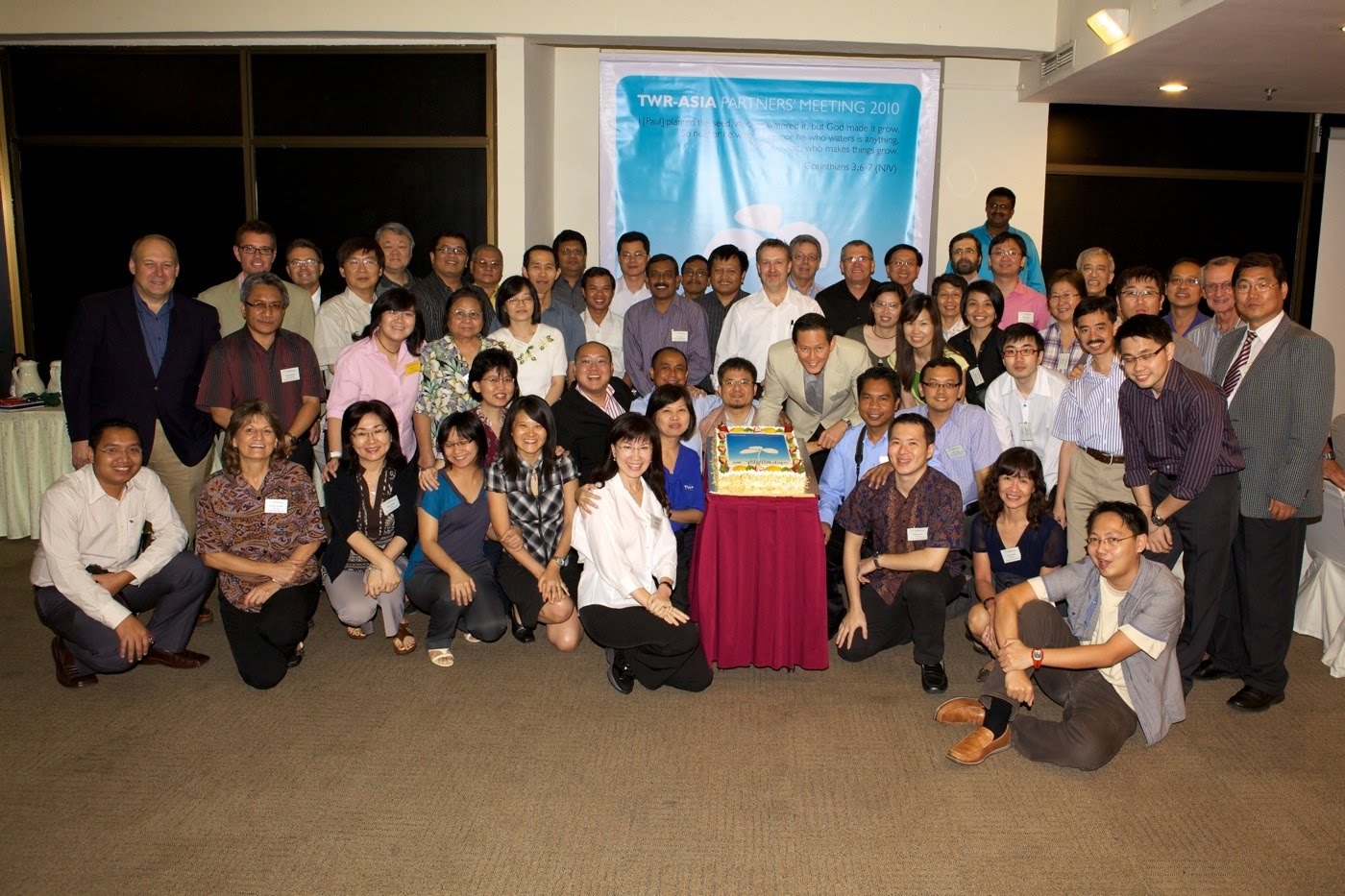
    I have spent the last few days in Singapore listening to reports from around Asia on TWR‘s outreach efforts. There’s an amazing amount of work being done in this region of the globe for the advancement of the gospel including work in closed countries like North Korea, Myanmar and China. TWR is the largest Christian Broadcaster in the world reaching out to over 200 languages in some 160 countries through radio waves, television, print and internet. It’s truly an amazing organization. As I sat with leaders of 12 different countries/regions one common theme began to appear: mobile is our new frontier.

    TWR Partners of 12 different countries in Asia

    While radio is still the only way to reach millions in some cultures, mobile phones now make up the fastest growing communication device in the world. Even remote places in India and Africa now have affordable cell service with data plans. In the past few days I have been learning how Asians are using SMS or text services in marketing and the proliferation of Blue Tooth marketing. As I walked through a mall posters advertise “turn your blue tooth on and we’ll send you a coupon.” Now concert goers can receive a small video, a free song or any mobile friendly file through a blue tooth connection. Shortly we’ll receive our church bulletin to our cell phones through blue tooth or a dedicated app.

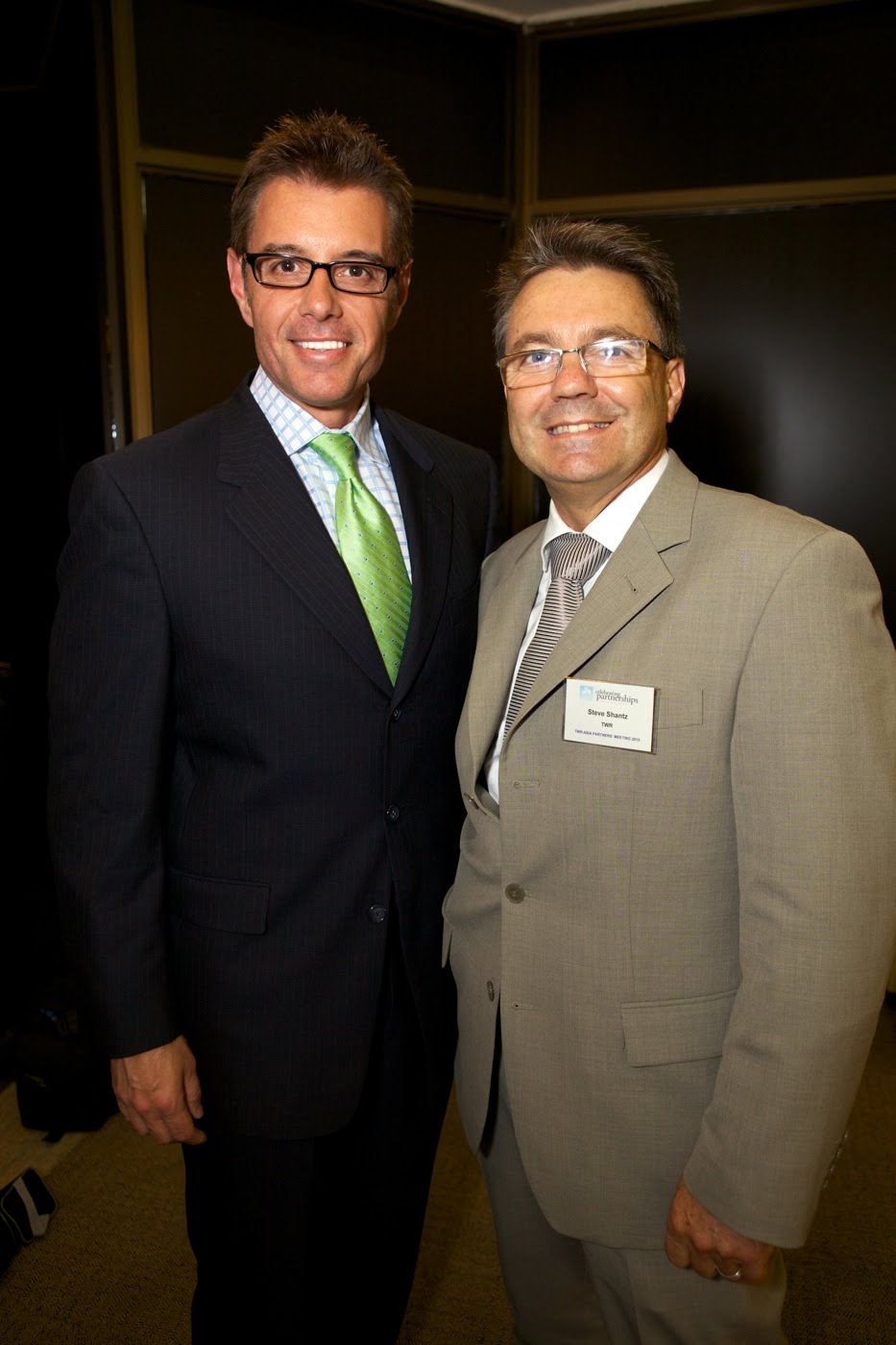
     With TWR’s CIO Steve Shantz.

    I’m honored to be a strategic technology partner for TWR (The A Group is developing several new technologies for TWR including mobile apps and a comprehensive Digital Management System). And I’m encouraged by their vision for ministry and not for the medium. It would be easy for such a legacy organization to say “we are radio people, we should stick with what we know.” But instead their focus is on the message and the most effective way to broadcast it to the entire globe.

    In what interesting ways have you seen technology being used for ministry?