Author: Maurilio Amorim

  • Turtlenecks Are Back with a Punch

    Turtleneck sweaters are one of those winter basics that never go out of style. Every man should have a basic black turtleneck. This Fall the turtle returns, but not in the supporting role of years’ past, but as a leading piece. Texture and bold, jewel-tone colors make this season’s version stand out. When paired with an dark suit or jacket, a bright turtleneck can breathe life back in to the drab black-on-lack from past seasons.

    turtle-cavalli
    A Cavalli turle with an tone-on-tone jacket. Matching tone-on-tone can be tricky. There's a fine line between hit and miss.
    turtle-margiela
    Maison Martin Margiela uses the burnt orange turtle to breathe life into an otherwise monochromatic and bland color pallet.
    turtle-margiela2
    Another Margiela combo paring a double breasted jacket with a turtle. The collar is too big and bulky for my taste. I prefer a smaller, more streamlined one.
    turtle-ralph-lauren
    Yes you can pair black with brown. This Ralph Lauren ensemble works well.

    Are you a fan of the turtle neck?

  • Launching a Max Lucado Best Selling Book

    Every Christian has a story of redemption to tell. One would be hard-pressed to find a better story-teller than author Max Lucado. Max has been a best-selling author for over two and a half decades. I remember reading my first Lucado book during my graduate school days. Chances are that if you’re a Christian, you have read some of Max’s books. I was thrilled as my company, The A Group, was chosen by Zondervan Publishers to lead in the efforts of getting Max’s latest release to the public. Our team under the leadership of Tami Heim, created a comprehensive marketing campaign that includes cover design, art direction, all traditional media, PR, social media and even a media-rich website with its own mobile app option for iPhone. Our intent is not only to market a great book, but to allow its important message to live beyond the written pages and to reach people wherever they are in a way to makes sense for them.

    HisisMine website Max Lucado

    In God’s Story, Your Story, Max’s inspires us to see how our own day-to-day story intersects with God’s grand, overarching epic of everlasting redemption. This book is all about our faith stories and how they fit in God’s own timeline. The idea of a website where people could share their story of faith, or testimony, came early on and grew legs. HisIsMine.com is place where you can write, upload audio or video of your own story of faith. To make the site more accessible, we created a mobile app for the iPhone. The book officially releases next week, but you can buy it on Amazon today.

    You can share your own story right now by clicking here. In the next few days, you’ll be able to download the mobile app to make that experience even more convenient.

    Max Lucado God's Story My Story

    While there are some foundations of marketing a book, there are no cookie cutter marketing strategies. Let me rephrase that: there should not be cookie cutter marketing strategies. Each plan our team creates is different.  If you start with “how can we get this message to those who need it the most?” be prepared to break the mold and come up with new ways to engage your audience.

    Do you read most paper or ebooks?

  • Thoughts on The Southern Baptist Convention Name Change

    The Southern Baptist Convention is considering a name change. “SBC president Bryant Wright has appointed a task force to explore the poss of a name change of the Southern Baptist Convention,” read the tweet from Thom Rainer, President and CEO of LifeWay. That’s the kind of news that gets a branding professional all fired up.  It’s not hard to reason that not all Baptists are southerners and therefore the current name no longer reflects the true nature of the organization. While I’m not part of the SBC decision-making process or involved with this project, I hope the task force considers these branding laws as they explore a new name.

    sbc logo Southern baptist convention

    A new name does not mean you have a new brand. New packaging without changing the product or experience only goes so far. Churches that changed their names in the mid 90’s to appear more community friendly but failed to change the experience learned that such strategy often backfired. People came expecting something different than what they got. It’s the classic “bait and switch” approach. A brand is made when the name, packaging and product deliver on the brand promise. And does so consistently over time.

    Align your organization’s name with its brand promise. It creates a powerful communication tool.  But in order to determine what the brand promise is, you must understand the organizational vision that drives the strategy that creates systems that delivers products. To go through a re-brand without understand this sequence is to miss a great opportunity in helping position the SBC in the mind of its audiences. FedEx is a good example of how name and brand promise go hand in hand. The Federal Express name implied its promise: fast delivery nationwide. Once it grew past national borders, the company’s new name, FedEx, help it transition to a global brand while keeping the brand equity it had nationally.

    Don’t undervalue your internal communication strategy. A re-branding launch strategy must take into account multiple audiences. The assumption that your internal audience understands and supports your new efforts is an erroneous and even dangerous one. I have seen denominational name changes go down in flames during a vote because of the assumption that key influencers were on board with the plan only to find out during a national convention that they opposed  it. It’s easy to focus on your outside audience and forget that your internal stakeholders needs even more communication.

    How do you feel about The Southern Baptist Convention changing its name?


  • The Opportunity During Tough Times

    We fear that Wall Street is still spiraling out of control, our economic system might in total chaos and the sky  might be falling as well. While I find myself very concerned about our financial future, there’s something about a shake down in the way we do business that excites me. In my experience, difficult times for the business-as-usual approach always opens up new opportunities for creative, nimble and entrepreneurial organizations or individuals to find a break that fat, entrenched and risk-averse big business cannot or will not pursue.

    I started The A Group in November of 2001, a few weeks after 9/11. Most people thought I was crazy because of the overall fear and paralysis in the marketplace. “Boy, I hope you’ll be ok; these are difficult times,” I heard over and over during the early days. And they did represented the reality of the day. People were looking around waiting to see what the tragedy really meant for our economy, our businesses and the future of our lifestyles.

    But while everyone waited for the proverbial “what’s next,” I was able to negotiate a great rate on an office space lease. Due to the overall fear in commercial real estate at the time, my landlord was willing to accept less money for the space as well as take a risk on an unproven, immigrant-owned, start up since his other prospects were suddenly gone.

    During that time the work force also swelled up since hiring slowed down tremendously. I was able to cherry-pick our first “Groupers” [a Grouper is a member of The A Group team and, no, they are not fishy] at reasonable salaries. I was also able to secure great payment terms with our strategic vendors as well since they were eager to land new accounts.
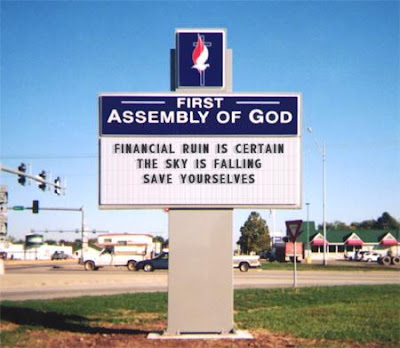
    The opportunity during tough times

    While every crisis brings different challenges, I’m certain the challenges we face today will create new opportunities and exciting new businesses, products and ministries will be introduced by those who can quickly adjust to a new reality. If you’re able to look past what you might be losing and see how you can potentially gain, you could win big.

    In days like these, I think about the story I heard a few years ago where two shoe salesmen during the turn of the century were sent to Africa to open this new territory for a large shoe manufacturer. Not long after their arrival the home office received telegrams from both men. One said “Bad news. No market here. People don’t wear shoes. Coming home,” while the other read “Amazing opportunity. No one has shoes yet. Send more people.”

    I know I can’t do anything about the state of the current economy or how our government reacts or doesn’t to our nation’s challenges, but I can look beyond them and find out what hole will be left in wake of this storm for the nimble, creative and entrepreneurial guy to fill. Maybe my telegram back to headquarters will read something like: “Times are tough. Everyone needs our help. Great opportunity. Let’s expand”

    What opportunities do you see right now?

  • Becoming the Best Me I can Be

    “That’s just who I am, and I have made peace with that.” I could not help to eavesdrop on the conversation going on next to me. The gist of the whole thing was that the man speaking those words had come to grips with himself, more specifically, with his weight and whatever other dynamics that go along with being a large person. I struggle with that statement every time I hear it.

    best me I can be

    There’s something good and even healthy in realizing who you are, and as the Bible says we are “fearfully and wonderfully made.” Understanding that God created us uniquely and for a purpose is a great place to be psychologically because culture tries hard to define for us whom we should emulate, how we should look and act. It’s comforting hearing from people who do not buy into all  of that.

    But there’s a darker side of that statement that I cannot help but consider, specially coming from someone who could benefit from losing weight even if done so for health reasons alone. There’s this nagging feeling that it’s easy to settle for the status quo than to pay the price and fight to get to a better place. I wrestle with it constantly. I must confess I have a tendency to go overboard with everything I do, so I’m aware I can be overzealous about personal goals, specially when it comes to health and fitness.

    I have decided that  I need to become the best me I can be. I know what that means for me, or at least I’m trying to figure it out. I have no idea of that means for you, and I will not impose my own personal goals on you, on my family, or friends. I must confess, I have done that in the past with no success, instead, I frustrated and hurt the people whom I love.

    But I still believe that tomorrow can be better than today. Call me naive, but I do. I believe that I can grow, learn, train, lose weight, and get stronger even when most people would label me as being past my prime.  The way I see it, if I shoot for the stars and only get to the moon, I will be further than I have ever been.

    How do you handle the tension of becoming your best and being content with who and where you are?

  • Should Men Color Their Hair?

    Men and hair coloring have been taboo subjects. For some the conversation is just as “off the table” as the “don’t ask, don’t tell” gay policy for the military. But regardless of its status, men’s home hair coloring business is booming. According to industry experts, it grew by over 10% during 2010.

    Men, gray hair can make you look distinguished or it can make you look old and tired. Sometimes it lends credibility and other time it lands you a date at the retirement home for a 4 p.m. dinner.  I know guys who gray prematurely and find themselves mostly gray in their mid 30’s, and I also know guys in their late 40’s that have not shown any signs of graying–not fair, but true. Whatever you decide to do about it, you should feel comfortable with the decision.

    Recently, Patrick Dempsey became the face of L’oreal’s new men’s home coloring product. Since it hit the market a year ago it has flown off the shelves. You are probably like most guys I know and are too cheap and/or embarrassed to let a professional color your hair. So in your do-it-yourself attempt to have hair like Mr. Dempsey, you should consider the following before trying to color your hair or risk looking like the tragic Wayne Newton.

    Patrick Dempsey hair color
    Patrick has "the hair" and look to endorse the new L'Oreal men's hair color kit.


    Newtons bad hair color
    I'm not even going to address the plastic surgery issues, but the jet-black hair makes him look unnatural. Maybe he's the new face of Sharpie.
    •  Your “natural” color is lighter than you think. Always go for a color that’s a shade lighter than what you think you need.
    • The longer the stuff stays on your head the darker it becomes. So pay attention to time.
    • Use a mirror and make sure you get the back of your head as well. Just because you can’t see back there, doesn’t mean the rest of the world cannot either.
    • The dye will stain your skin, meaning anywhere it touches including your forehead, ears, hands. It also stains wood cabinets and even tile (don’t ask how I know.)
    • The older you get the lighter your hair should be or else you’ll risk getting the “Elvis look” or the “Wayne Newton” as his picture so disturbingly shows.
    • If you are thinking of dying your hair, don’t wait until you head is complete gray or the change will be very drastic. “Whoa, what happened to you?” is not what you’re going for.
    • Once you get started, you’ll need to do it every few weeks. It’s a commitment.
    • Spend a few dollars and have a professional do it. You won’t regret it.

    What’s your take on men coloring their hair?

  • 5 Reasons Your Business or Ministry Might Not Succeed

    Your dream venture might never happen not because it’s not a good idea or it’s not needed, but because it might be under resourced.  Entrepreneurs in their zeal to get their dreams birthed usually shortchange the true cost of what it takes to create a sustainable business. Here’s some of the most common mistakes:

    Small Business ministry Failure

    You don’t pay yourself enough. In order to get the business going, entrepreneurs will often pay themselves very little or nothing at all. That’s not a sustainable model. If the business cannot pay you a decent wage in a short period of time, then rethink your model altogether.

    Your financials, income/expense projections are unrealistic. I was guilty of this for years. Being optimistic, I have always projected high on the income, and being very frugal, I default to thinking things cost a lot less than they actually do. Unrealistic targets can put too much stress on a new venture. If you are new at this, find someone whom you can trust with business questions and have that person check your assumptions. Assume the best case scenario but be prepared for the worst.

    You don’t have enough margins for error. Some ventures feel like the Apollo 11 mission to the moon: in order for it to survive everything has to go just right. That’s seldom the way things go. Contingency = good business.

    You don’t understand sales and marketing. A great service business, non profit, or product that no one knows about will put you out of business. A mediocre product in the hands of a great sales and marketing person or team has a much better chance to make it than something great without a champion to sell it.  And that’s even more true when it comes to churches and not for profits.

    You don’t have the right people around you. I have seen men and women with great vision, passion and talent whose dreams have never materialized because they did not have the right team, whether paid, volunteer or even advisory,  to pull it off. I wrote more about it here. The right people is critical to making it happen.

    Have you ever thought of starting your own business?

  • When is Your Project Ready for Launch?

    Whether you are ready to launch a new website, program, software, retail store, new product or even a new church campus, you need to know when it’s ready–not halfway and not overdone, but ready. I have coined a term for what the perfect launch stage, I call it “critical mass.”

    ready to lauch set go

    When launching something new, our tendency is to err on two opposite sides: too much or too little. Too much, or sometimes called “overkill,” can delay a project launch date, increase the budget and make it cumbersome and difficult to understand or navigate. I remember working on a software project that started out as a simple idea to solve a straight forward problem. During development it grew and by the time it finally launched, late and over budget, it was bloated and difficult to learn. Sadly, the extra features that cost the most and delayed the project were not as important to the users as the developers thought.

    Launching with “too little” is no fun either. If it’s not complete or finished enough to meet the need you set out to meet, then people will be disappointed. I remember visiting a retailer’s grand opening. I was surprised that the selves were half empty and they didn’t have any of the things I was looking for. “Come back next week, we should have a lot more stuff then.” Really?! Why didn’t you wait and opened the store with all your merchandize? Needless to say, I didn’t go back. They are no longer in business.

    So what’s the right balance? That’s the question on every project, or product manager or leader.  While it might be different in each case, here’s what it absolutely must do in order to survive:

     It must solve the problem it was created to solve, and do it well. Whether it’s software, product or a facility, it must do the very basic thing it needs to do in a way that grabs people and pulls them in. “This works great. I can’t wait to see what comes next.” Part of this is knowing the problem, how to solve, the audience and staying resolute on the scope. Trust me, this is hard said than done. Scope creep can slow you down, trigger-happy bosses can cause you to go out with less than you need. Remember you need critical mass, just the right amount of features, inventory, products, seats to make it work. For that to happen you better know the problem and your audience very well.

    Have you ever been part of a launch that was either premature or overdone? What happened?


  • The Return of the Double Breasted Jacket

    The double-breasted jacket has come back in a big way this year. It’s not the same version of the 1930s gangsta look or the 1980s resurgence with big lapels, extra thick shoulders pads and brass buttons. Labels are keeping it youthful and fun but making it more fitted, softer lines around the shoulders and using interesting fabrics. The fun part comes from paring unconventional shoes, no socks and bright colors.

    Some of you might feel the urge to reach way back into your closet and pull out your “vintage” double breasted jacket. Before you risk it, take a look at these new Fall and even Spring releases. If you are still not sure, ask your wife, girlfriend, mother, uh, not your mother, she thinks you look great in anything.

    chris-evans-double breasted suit
    Chris Evans aka Captain America has a light doubled breast jacket paried with a simple v neck and jeans. That's the first double breasted jacket to be on the cover of GQ in over a decade.
    D&G double breasted Fall
    The red sneakers add fun and youth to this D&G Fall suit.
    Ferragamo double breasted jacket
    More Spring than Fall this Ferragamo jacket has strong lines without the gangster vibe
    Dolce & Gabbana gray
    This Dolce & Gabbana jacket is not for the fashion timid. You can either rock this thing or look like an extra from Mel Gibon's Mad Max 1980 movies.
    Cavalli double breasted jacket
    This Roberto Cavalli jacket makes an entrance. Paired with white it's a great look for next Spring

    What’s your take on the new double breasted jacket resurgence?

  • How I Have Assembled an Awesome Team

    We purposely don’t have many sacred cows in the businesses that I run. We adapt and change fast and have become “platform agnostics” so we can server our clients better in a fast-changing business environment. Sacred cows only slow things down and are always self serving. There are three things, however, that we fight hard never to compromise. And if we ever do, we are quickly reminded of their importance and why after all these years, they are still relevant. We call it our 3 C’s.

    These core values are more than just posters on a wall or words on a website. These helped form the DNA of  these businesses and have everything to do with the environment we create internally. We take our time to hire someone at The A Group, so managing them is an easier process.

    hiring a winning team


    C is for Character
    Character is a foundation of any success enterprise. Therefore you cannot have an organization with high ethics if your employees (or customers, for that matter) lack integrity. This should be an obvious one, but you would be surprised of how many people find “gray areas” where there should not be any.

    C is for Competence
    A successful enterprise is formed by competent people who know their job and do it well. As I heard Jim Wright, CEO of Tractor Supply Co say, “If you have a C player, help him to become a B player or set him free.” Without competence your character is only able to keep you in the game for a little while. You will never be competitive with a bunch of mediocre people around you. Leaders who cannot get beyond hiring smarter, more talented people than themselves will stunt growth and lead struggling organizations. That’s specially true of churches.

    C is for Chemistry
    The team must function as a team or the entire organization suffers. In the past I made the mistake of not paying much attention to chemistry with disastrous results. I had competent people who couldn’t get along and the tension in meetings was terrible. I also had to fire a few clients along the way because we just didn’t get along. Every conversation was a push back and every project was a painful exercise in “not screwing up” instead of a partnership into creating something great while having latitude to fail along the way. If there is no trust, grace and collaboration, you might have a mob, but you do not have a team.

    What’s the best or worst team you have been part of? Why?