Month: March 2014

  • How to Decide If You Can Trust Someone

    There are times you instinctively know you should not trust someone. I have learned to trust my first gut reaction after getting in a business or personal relationship with someone I had second thoughts about only to be burned by them later. While I don’t think I can teach anyone how to develop an intuition on such matters, I can share some of the signs I look for in a person when I first meet them.  Here’s what I watch for:

    How to decide if you can trust someone intuition

    How they treat people whom they perceive “beneath” them. I watch closely the reaction to a restaurant server or an assistant when he or she messes up or fail to perform to the person in question’s standards. I remember one man who wanted to invest in one of my ventures yelling at a woman who served us the wrong beverage. It was an honest mistake. His reaction was clear enough to let me know I did not want to have this man as a partner.

    How they treat animals. I know this sounds crazy.  You don’t have to be an animal lover, but people who are cruel to animals are usually even more so to humans. Stay far away from them. I once did not hire someone who joked about shooting the neighbor’s cat with a BB gun for fun.

    Their business and personal history.  If the person you’re considering partnering with does not have business relationships that are long term that’s usually for a good reason: they have burned too many bridges and now you might be their next victim. Check their friendship network. If the important people in their life are all brand new, that should be a red flag as well.

    How they talk about their previous relationships. If the he quickly talks negatively about his former boss, girlfriend, business partner, without much prodding, chances are you’re the next in line after your deal goes sour.

    What’s important to them. Someone’s world view matters. A lot. If you are trying to align with someone whose priority, sensitivity and belief system is divergent from yours, think twice about it. Well, I’d go even further to say, just don’t do it. At one point I had people working for me who had great skills, but whose worldview were so different than mine that the longer we worked together, the more difficult our work environment became.

    What do you look for as you are trying to figure someone out?

  • Selling Tomorrow’s Ideas to Yesterday’s Generation

    “How do I convince my boss to try new ideas and technology?” That is  one of the most popular questions I get during my speaking engagements. It’s often the young staff from businesses, churches, and organizations wanting to venture out into a social media campaign or a dynamic new mobile tool or app who face push back from leaders who don’t understand or are threatened by the new and unfamiliar. So how do you get your point across to yesterday’s generation without frustrating them and getting shut down?

    If I have learned anything in 20 years of marketing is this: you must speak the language of your target audience. And that goes for the people you have to help adopt a new vision or strategy.

    Often you have to use yesterday’s language to sell today’s idea to accomplish tomorrow’s mission.

    Church marketing is a perfect illustration for this principle. While some  leaders might argue whether or not churches should be in the marketing business, most will agree that every church should be in the evangelism business. Often in my conversations with church leaders I speak of an outreach, or an evangelism plan instead of a marketing and branding campaign. At their core they are the same–how can we reach more people with the message of the Gospel–but language makes a huge impact in the way an audience responds to them.

    If you’re having a difficult time getting buy in for your idea, try rethinking the way you’re communicating it. Describe your new concept in a way that resonates with your audience. Use a frame of reference that makes sense to them. While you might need to revamp your website, what you are ultimately trying to do is to reach and connect with more people. It’s hard for someone to shoot down “digital evangelism” or the creation of a stronger “sales channel,” as you make the  case for an e-commerce site. In certain circles, a social media campaign, might be framed as a “new acquisition strategy.” Don’t underestimate the power words have to persuade.

    What has been your experience in selling new ideas to an older generation?

  • The Mobile Church: Text Giving

    Text giving is an important tool for the growing church. This post is part 1 in a new series, The Mobile Church. In this series, we explore the way the mobile phone is changing the way people connect and the way churches minister. What was once seen as a potential threat to community is now the great connector of people, creating new opportunities for churches and ministries to reach audiences, minister, and raise funds. Follow this series to learn about the trends in technology that can no longer be ignored.

    texting, text giving, text give, giving text

    Jennifer is a 26-year-old loyal churchgoer. Each Sunday as she leaves the house, she checks to make sure she’s not forgetting one thing – her phone. She doesn’t bring her Bible and notebook. She certainly doesn’t bring her checkbook. She follows along with the sermon on her Bible app, tweets a verse that stood out to her, then texts her friends to meet for lunch. How do churches motivate people like Jennifer, who now communicate and manage their lives almost entirely through their smartphone, to be a part of the mission and give to the church?

    One technology trend that is quickly gaining traction is text giving and purchasing. By simply texting an organization’s keyword and a donation amount, users can easily give in just a few steps from the palm of their hands. First introduced through disaster relief campaigns, new text giving platforms have streamlined the process, cutting out carrier fees and long turn around times, making text giving a viable option for even small organizations. It’s also not limited to young audiences; people of all ages are more and more relying on their phones to manage their lives. Churches that have instituted mobile giving are seeing quick audience adoption and remarkable results.

    text giving, cross Point,

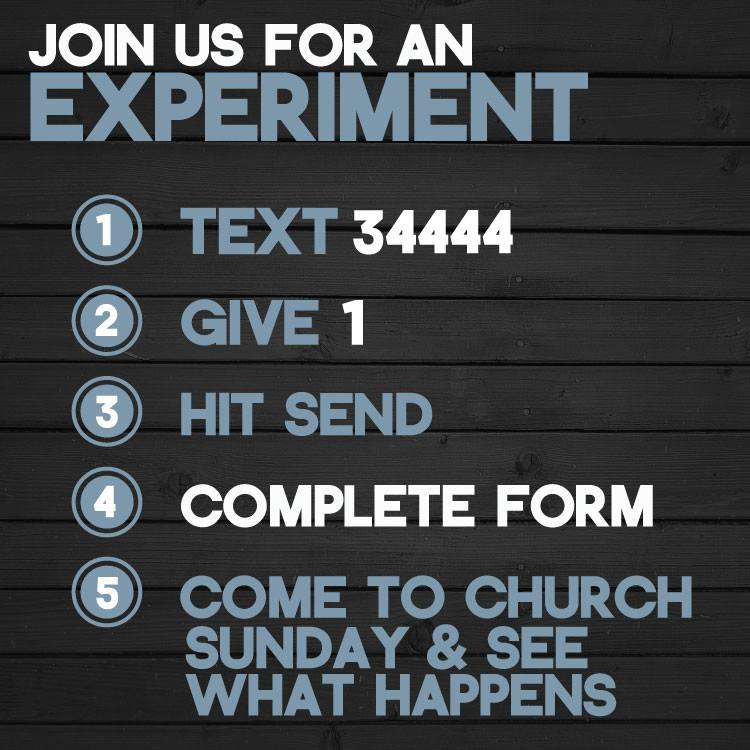
     Cross Point in Nashville, Tennessee, recently adopted text giving through Textify Mobile, an easy-to-use text marketing and giving platform designed with churches and nonprofits in mind. The church launched its text giving by creating a campaign that asked the question “What would happen if everyone gave something?” The pastor, Pete Wilson, walked the congregation through how to give and asked everyone to give just $1, illustrating how a little bit can make a big difference.

    In just one Sunday, Cross Point engaged more than 700 first-time donors through Textify. By making it easy and accessible to give, and by centering it around a compelling campaign, people who normally did not donate were motivated to do so.  The church was even able to promote the campaign on Facebook, since text gave people an easy way to give throughout the week. Another church offered text giving as an option for their Christmas Eve giving and raised nearly $10,000 via text alone.

    “We started Textify and saw almost 700 new donors to Cross Point in one week!” said Stephen Brewster, Cross Point creative arts director. “It is so simple, the user experience is great, and it is well designed. Even creative people will enjoy using this platform.”

    These incredible results do not just bode well for church tithing; they also show how comfortable modern audiences are with text messaging, not hesitating to even transfer funds through a mobile phone.  In fact, they are often more likely to engage with it than with something requiring the old checkbook (assuming they even have one). Text giving is here, and it is not only critical for staying up-to-date with the current donors, but it represents a unique opportunity to reach a brand donor base of people who have never given before.

    Have you thought about a text strategy for your church? Do you have one?