Month: February 2012

  • Excellence vs Perfectionism and the Cost of the Impossible

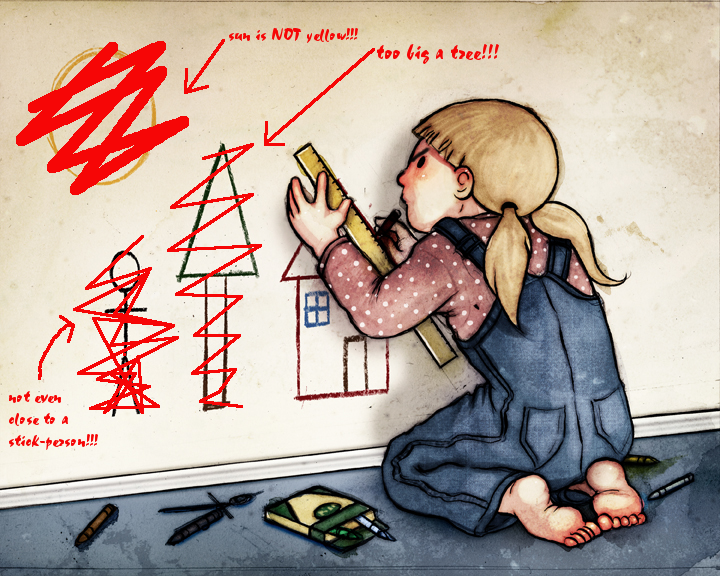
    No one will argue that we must strive for excellence. After all who wouldn’t want a life, a business, a team, a ministry built on the best we can do and become. It’s the ultimate calling of a believer: to give our best to God no matter the task at hand. But those of us who are perfectionists, even the reluctant ones (and I will include myself in this group) will hide our true agenda of the pursuit of the never-attainable perfection behind the noble pursuit of excellence. This is the proverbial wolf in sheep’s clothing. Find a reason that no one can argue with…excellence…and hide underneath it a more nefarious motivation…the pursuit of the impossible.

    Perfectionist

    But in my struggle with the perfect, I have learned that ultimately, perfectionism costs me not only a lot personally, but it can wreak havoc in the organizations I lead. After all…

    It is demanding.

    It is insatiable .

    It is ungrateful.

    It is selfish.

    Perfectionism mocks excellence as an unfinished good. It shuts down new opportunities on the altar of incomplete business. It dismisses talent by its impossible standards. It destroys relationships by its unreasonable expectations.

    Perhaps it’s time for some of us to lift the sheep skin and expose the monster underneath.

    How has perfectionism, whether yours or someone else’s,  impacted your life?


  • The Trap of the Critic

    It’s easy for me to be a critic.  I grew up in a family that prided itself in finding what’s wrong with the world and each other. It was sort of a sport around the dinner table to see who would outwit the rest and deliver the best put down. We all laughed, but someone always got hurt.

    Now I’m a professional critic whose livelihood is partially funded by my ability to discern what’s wrong or what’s not working and help organizations move to the next level. This is a dangerous profession, and I’m very aware of the insidious negativity that can creep in and suck the life out of every experience. I have to work hard on being positive because cynicism and negativity are the first ones at the gate.


    When the critic in me starts to take over my heart, I go back to the words of Henri Nouwen. He taught at Harvard and Yale and gave up his career to work among those who were severely physically and mentally challenged. This is what he writes about an angry man:

    He sat in front of me. He was in his early sixties. The deep lines in his face, his unkempt hair, but mostly his burned-out eyes showed he was a very unhappy man. We talked about the weather, “It’s hot” he said, “Much too hot, I can hardly breathe, the humidity kills me.” I tried to cheer him up a little by saying, ‘We can use a little sun, and the humidity, well think of it as a free sauna.’ But he did not hear me. No smile came to his face. He began to talk about a colleague who left him many years ago. About a friend who had not called or written to him for two months, and about his neighbors who kept him awake during the afternoon when he wanted to take a nap. My presence was little more than an occasion for him to pour out his many complaints.

    He pointed out to me the corruption in our government, the war in Bosnia, the hunger in Somalia, the violence in South Africa. “The world is falling apart all over the place”, he said, “the television, the radio, the newspapers, they all show it. And they don’t even show the full truth.” I felt a sensation of darkness creeping around me. Where is this darkness coming from, I wondered. I am face to face with an angry man.

    I don’t want to end up like the angry man and those whose lives are dedicated to criticizing, denouncing, exposing, and judging people…whom most often, they don’t even know. Sadly, the internet has given all of us a perfect dark place to hide and hate.

    I don’t want to be a cynic. I don’t want to see the glass half empty.

    I fight the tension of seeing what needs to be improved and of becoming the critic who cannot find good in much of anything. This post is mostly for me. I need to be reminded from time to time the reason for what I do, and that regardless of all that still needs to be done and improved, I need to find the heart inside of the critic, the altruistic purpose for the change.

    My prayer is that I don’t become the angry man Nouwen encountered and that my words would propel people forward instead of steal the joy out of what they do.

    How have you been impacted by a critic in your life?

  • Smart Casual or Business Casual? What’s the Difference?

    As if there were not enough ambiguity in trying to define “business casual” in the workplace, we now have “smart casual” showing up in magazines, invitations, and office policies. Wikipedia’s vague and convoluted description of “smart casual” is evidence of there being no real standard for the term:

    It has been suggested that smart casual for men consists of dress trousers—this includes chinos[2]—a long-sleeve dress shirt[3] (tie optional), leather loafers or dressy slip-ons, dress socks, a belt, and, if appropriate, a sport coat or blazer. Some interpretations allow for sweaters and knit pullovers paired with button-down shirts; especially v-neck sweaters. Although jeans are usually not an option, the Burnt Hills smart casual allows for crisp blue jeans to be worn (no holes or places where you stepped on the heel too much). A tie is usually introduced to the ensemble, and the wearing of a jacket is stressed.


    Here’s my take on the difference between the two.

    smart casual

    “Business casual” usually means no denim, no casual shoes (like footwear made of canvas), and the absence of a tie as well as a sport coat (even though a sports jacket paired with a casual polo is an acceptable as a business casual look, however unfashionable it might look).

    smart casual

    “Smart casual” (as I define it) allows the combination of business, formal, and casual in…well…a “smart” look. While ties don’t show in business casual, they are often part of the smart ensemble alongside vests, jackets, cardigans, and even hoodies.

    A word of caution here. Putting a smart casual ensemble together takes a strong sense of style. So if you are not certain on what to do, don’t go far from home. Do yourself a favor and ask a trusted source for help. While some guys look hip mixing matching styles, others look a department store threw up all over them.

    What is your take on smart casual?

  • Selling and The Art of Persuasion

    Often the difference between success or failure in a meeting lies on how to read or work the room. The best presentation tools cannot overcome the dynamics that often come to play underneath the surface. While there’s an art element to persuasion, there are also some skills that can be learned. Next time you are selling an idea, a project, or just yourself, consider the following:

    persuasion

    Find a personal connection. We do business with people we like. We hope they can deliver the goods. Don’t underestimate the power of a personal connection in a professional setting, especially if you’re selling…even just an idea. I have created strong bonds with perfect strangers after a few seconds of discovering that we both like to run, or that we have teenage children the same age, or that we both love the carrot cake at J. Alexander’s. I believe that people innately want to make friends and are looking for reasons to bridge the gap – from meeting a stranger to making a friend. Help them do that by asking probing questions and finding common ground.

    Find a professional connection. Knowing respected people in business or ministry that help to legitimize or validate your credentials is critical on winning over decision makers. This should be natural and part of the conversation. The danger is to name drop for the sake of making yourself look good. That’s not only annoying, but it often backfires and repels the very people you’re trying to impress. You have to sell your credentials without selling them too hard.

    Don’t assume you know who the decision maker is. If you don’t know the group you are presenting to, don’t assume the highest ranking person is your target audience. In my experience the “boss” is not always the one making the final call. As a CEO, I delegate a lot of important decisions to my direct reports. It annoys me, and them, when a sales person will direct every comment and question to me as if no one else in the room mattered. You are not going to sell me using this approach.

     What else would you add to this list?


  • Managing Expectations: The Importance of the Weakest Link

    Managing expectations is critical in every organization. But it is especially important in the service-oriented businesses where one’s last experience can ruin years of a strong reputation. I was just reminded of how important that is during dinner out last night. Sometimes it is not the big things that can ruin an experience, but a careless decision that puts your entire team at a loss.

    I met with some co-workers and a client at one of Nashville’s most celebrated restaurants. My out-of-town guest is a foodie. He has eaten his way through Europe as well as some of the best restaurants in the US. I was hoping to make a good impression of Nashville and what we had to offer. He and I were immediately drawn to one of the chef’s signature dishes: the miso crusted sea bass.

    Managing expectations

    We were promptly told that even though the menu said sea bass, the actual fish was grouper. For environmental reasons, the restaurant decided to no longer serve the endangered fish. I guess that for the same environmental decisions, they decided not to reprint the one-page menu either. “Our new menu is coming soon,” our server told us. However, it has been months since the sea bass had made its exit from the kitchen.

    Grouper is not a bad fish. But it’s not the same quality as the sea bass, not even by a mile.  My client politely asked, “so are you charging less for the grouper?” No, they were not. The poor server trying to save face quickly offered hope, “it tastes just as great the way we prepare it.”

    At that moment the dynamics of the dinner changed. The expectations placed on the kitchen staff to deliver a superior quality product (sea bass) but with inferior ingredients (grouper) was unreasonable. And they failed.

    The three of us who ordered the dish expected the expensive taste and texture of the high-cost item we had ordered. We got the best of what the inferior option could be, but, unfortunately, it was not good enough. Under those expectations, it could never be.

    I am certain that there are more than the three of us who were disappointed with the execution of the dish. Over the course of several weeks, others, too, had the same expectation. They looked forward  to a $30 worth of taste; instead they got something that should have cost around $20. I am not sure how much it would have cost the restaurant to replace the printed menu, but I know it would be a lot less than the brand-erosion such sloppy management decision has cost them.

    Managing expectations is a difficult but critical part in every organization. Millions of dollars in building, state-0f-the art kitchen,  modern decor, a great staff, and even competent cooks could not overcome something that could have been avoided by spending a few dollars on a new menu insert. Interesting how often you are only as strong as your weakest link.

    How well is your organization managing expectations? What kind of customer experience are you creating?

  • Successful Businesses Don’t Really Exist

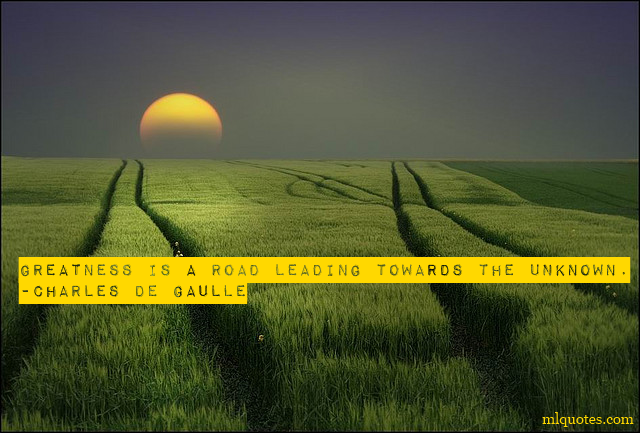
    “Great companies don’t really exist. What we have are great people whom collectively create successful businesses and organizations.” That was the heart of my presentation this week to our entire staff. As I tried to distill Jim Collins’ Good to Great into an hour lecture the bottom line because clear to me.

    greatness

    According to Collins, breakthrough organizations not only have the right people on the “bus” but also have them in the right seats. According to him, that’s one of the most important dynamics, if not the most important, in creating truly successful  businesses.

    While it’s easy to talk about “the organization,” I think we easily forget that like a family, a church, a community or any social entity, a business is comprised of first and foremost of people. The more competent and dynamic the team is the more successful the organization becomes. It’s not a complicated concept.

    But let’s take a step even further back. Let’s not talk about “people.” Let’s talk about “you.” If your place of employment were to be evaluated through your level of performance, how well would it rate? If the growth of your company could be directly tied to your personal and professional growth in the past year, how would that growth chart look?

    It would be disingenuous of us to complain about the state of the organization we work for if we are not willing to put our own growth, performance, attitude and productivity through the same measuring protocol. Regardless of today’s accomplishments, if each individual team member is not growing, then the organization as a whole is not growing. The question then is how am I contributing to creating a successful business?

    I challenged myself and my team to answer the question that I will ask you to consider:

    What am I doing to become great professionally as well as personally?

  • The Tyranny of the Urgent

    “I’m already overwhelmed in my job. I have no time left to write a blog post, create a conversation on Twitter, or engage in a Facebook discussion.” I hear it quite often these days.  I understand people’s frustrations. We all seem to be tapped out. My answer is simple: you must let go of the urgent and not important and focus on the important but not urgent.

    Easier said than done.

    The urgent always demand our attention, whether or not it warrants it. It’s the “needs immediate attention” email you get in the middle of the day, or a “crisis” a client is having you must attend to. Much like disgruntled church members, the “urgent but not important” tasks fill our days and rob us from doing what we should be doing but, unlike its obnoxious counterpart, the “important but not urgent” will not grab us by the neck and yell, “deal with me.”

    Ultimately, however, the “important but not urgent” is where breakthroughs happen, where possibility and creativity flourish and where our time is best spent.

    As I was telling a room-full of people to stop dealing with the urgent, I felt convicted to heed to my own advice and to take inventory. So, I’m asking you and me the question:

    What’s urgent and not important in your life you need to addrees?


  • How to Hire Well: The Owner Principle

    I have always been an owner even when I worked for someone else. Recently I have thought about my employment history as well as those who have been my colleges and employees over the years and have come to the conclusion people fall in two main categories: owners and workers. Before you dismiss the post, let me explain. This is not a legal distinction, but a psychological one. Interestingly, some business owners behave like managers or workers doing what’s required of them and completely disconnecting from their jobs once the clock hits 5 p.m. Some hirelings whose heart and passion for their performance cause them operate more like owners. The more owners you have in your organization, the more successful you’ll be, I’m convinced.

    Here’s a list of owner characteristics:

    • Owners care about the entire team and not just themselves. They know that no one is successful alone.
    • Owners understand that a missed deadline is serious business. After all, it’s their word on the line.
    • Owners don’t watch the clock. They watch their to do list.
    • Owners are more driven by their work ethic than by their boss’ expectations. Owners often go beyond the call of duty to make sure a job is done right.
    • Owners see their work as an extension of themselves and not just a job to be endured.
    • Owners are motivated by the satisfaction of a job well done and not just by financial gain.
    • Owners cannot be micromanaged. They can bring more to the table on their own if you let them grow.

    I’m sure I’ve missed something on this list. What else can you see that owners do that employees don’t?