
 3
3
Thoughts from a Church Secret Shopper
I often walk through a church service as a secret shopper. It’s my way to assess how aware and prepared a church is for a newcomer–specially one that might be outside of the faith. As I experience a weekend service for the first time, I try to answer the question that every first-time guest asks himself: “why should I come back here?” The question is not as much about musical style and preaching method as it is about connecting spiritually and emotionally. The Answer to that question begins at the parking lot and ends on the way home. It’s not about any one thing, and, yet, it is about every single thing. I’m not sure most pastors and church staff realize that newcomers want to like the church they chose to visit. They are looking for reasons to say, “I want to be part of this congregation.” Whether they are…
 6
6
How Should We Manage Technology?
How far into the future should your technology plan look? That’s a question I am asked often these days. Technology can be a capital expenditure for businesses and not-for-profits. It seems like yesterday I was sitting in board meetings considering investing in technology, websites, servers, and productivity tools that we expected to be useful for “the next 10 years.” Oh my, how times have changed. Unfortunately today I run into all sorts of limitation issues when clients who bought expensive technology 5 years ago want to continue to use it in today’s context. The proliferation and democratization of technology has taken innovation from the large software and hardware developers such as Microsoft and has moved them down to the level of a college kid who starts a little online tool for his friends based on an open-source platform we now call Facebook. It seems like every day something amazing has…
 4
4
QR Codes and the Costly Price of Marketing’s Cutting Edge
In marketing, as in life, just because it’s new and popular, it does not mean you should do it. One of the latest trends in consumer marketing has been the use of QR Codes (short for Quick Response Code). The two-dimensional matrix was first created by the automotive industry but has now become popular with marketers. But even a great tool in the wrong application is too often ineffective. These codes are effective because they can hold a lot of information and are able to directly link smartphones to mobile-friendly websites where consumers can interact with a product or brand in a media and commerce-rich environment. My company, The A Group, has been successfully using QR Codes in marketing campaigns for a long time. While I am an early adopter of tools that might give our clients a better chance to communicate with their audience, I’m careful not to do…
 3
3
Sometimes Failure is Inevitable
Some risks you cannot mitigate. Some decisions you can take all the right steps, speak to the right people, do all the research and you still end up with a dud. Sometimes a very costly dud. A few years ago we hired a technology consultant who came to us highly recommended by a high-end technology firm that had recruited some of our best talent. His credentials were as impeccable as his experience. His previous projects were much larger and complicated than the one we chose to embark with his guidance. This guy was a total package: He spoke high-level Geek. He was from out of town. He was tall and confident. He was expensive. He designed a very, very expensive cluster of servers that were supposed to make our lives easier and serve our clients better. It was a failure. A big failure. It was a cluster alright, but not…
 6
6
Excellence vs Perfectionism and the Cost of the Impossible
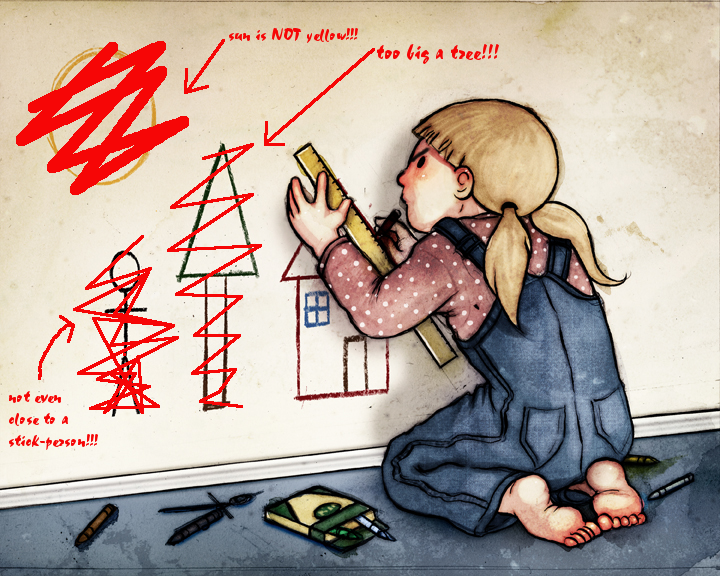
No one will argue that we must strive for excellence. After all who wouldn’t want a life, a business, a team, a ministry built on the best we can do and become. It’s the ultimate calling of a believer: to give our best to God no matter the task at hand. But those of us who are perfectionists, even the reluctant ones (and I will include myself in this group) will hide our true agenda of the pursuit of the never-attainable perfection behind the noble pursuit of excellence. This is the proverbial wolf in sheep’s clothing. Find a reason that no one can argue with…excellence…and hide underneath it a more nefarious motivation…the pursuit of the impossible. But in my struggle with the perfect, I have learned that ultimately, perfectionism costs me not only a lot personally, but it can wreak havoc in the organizations I lead. After all… It is…
 17
17
The Trap of the Critic
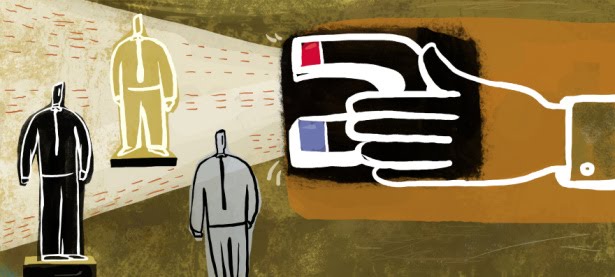
It’s easy for me to be a critic. I grew up in a family that prided itself in finding what’s wrong with the world and each other. It was sort of a sport around the dinner table to see who would outwit the rest and deliver the best put down. We all laughed, but someone always got hurt. Now I’m a professional critic whose livelihood is partially funded by my ability to discern what’s wrong or what’s not working and help organizations move to the next level. This is a dangerous profession, and I’m very aware of the insidious negativity that can creep in and suck the life out of every experience. I have to work hard on being positive because cynicism and negativity are the first ones at the gate. When the critic in me starts to take over my heart, I go back to the words of Henri…
 6
6
Smart Casual or Business Casual? What’s the Difference?
As if there were not enough ambiguity in trying to define “business casual” in the workplace, we now have “smart casual” showing up in magazines, invitations, and office policies. Wikipedia’s vague and convoluted description of “smart casual” is evidence of there being no real standard for the term: It has been suggested that smart casual for men consists of dress trousers—this includes chinos[2]—a long-sleeve dress shirt[3] (tie optional), leather loafers or dressy slip-ons, dress socks, a belt, and, if appropriate, a sport coat or blazer. Some interpretations allow for sweaters and knit pullovers paired with button-down shirts; especially v-neck sweaters. Although jeans are usually not an option, the Burnt Hills smart casual allows for crisp blue jeans to be worn (no holes or places where you stepped on the heel too much). A tie is usually introduced to the ensemble, and the wearing of a jacket is stressed. Here’s my…
 7
7
Selling and The Art of Persuasion
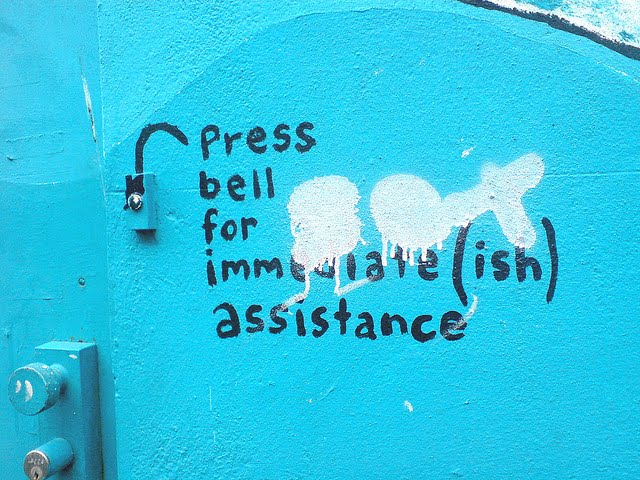
Often the difference between success or failure in a meeting lies on how to read or work the room. The best presentation tools cannot overcome the dynamics that often come to play underneath the surface. While there’s an art element to persuasion, there are also some skills that can be learned. Next time you are selling an idea, a project, or just yourself, consider the following: Find a personal connection. We do business with people we like. We hope they can deliver the goods. Don’t underestimate the power of a personal connection in a professional setting, especially if you’re selling…even just an idea. I have created strong bonds with perfect strangers after a few seconds of discovering that we both like to run, or that we have teenage children the same age, or that we both love the carrot cake at J. Alexander’s. I believe that people innately want to…
 7
7
Managing Expectations: The Importance of the Weakest Link
Managing expectations is critical in every organization. But it is especially important in the service-oriented businesses where one’s last experience can ruin years of a strong reputation. I was just reminded of how important that is during dinner out last night. Sometimes it is not the big things that can ruin an experience, but a careless decision that puts your entire team at a loss. I met with some co-workers and a client at one of Nashville’s most celebrated restaurants. My out-of-town guest is a foodie. He has eaten his way through Europe as well as some of the best restaurants in the US. I was hoping to make a good impression of Nashville and what we had to offer. He and I were immediately drawn to one of the chef’s signature dishes: the miso crusted sea bass. We were promptly told that even though the menu said sea bass,…
 8
8
Successful Businesses Don’t Really Exist
“Great companies don’t really exist. What we have are great people whom collectively create successful businesses and organizations.” That was the heart of my presentation this week to our entire staff. As I tried to distill Jim Collins’ Good to Great into an hour lecture the bottom line because clear to me. According to Collins, breakthrough organizations not only have the right people on the “bus” but also have them in the right seats. According to him, that’s one of the most important dynamics, if not the most important, in creating truly successful businesses. While it’s easy to talk about “the organization,” I think we easily forget that like a family, a church, a community or any social entity, a business is comprised of first and foremost of people. The more competent and dynamic the team is the more successful the organization becomes. It’s not a complicated concept. But let’s…